
Long-Range Precision Shooting-The Skills, Gear & Knowledge That Matter
Long-range precision shooting is about more than hitting distant targets. It's about understanding how your rifle, ammunition, optics, and environment work together.
There's no fixed distance that defines long range. A 200-yard shot might feel easy from a stable position but become challenging with a smaller target or changing wind.
Whether you're into traditional target shooting or Precision Rifle Series (PRS) competition, understanding the fundamentals makes all the difference.
1. What Affects Long-Range Accuracy?
Precision shooting involves more than a capable rifle. Five key factors influence consistency:
-
Shooter: Position, trigger control, recoil management, and follow-through.
-
Rifle & Ammunition: Mechanical accuracy and muzzle velocity consistency.
-
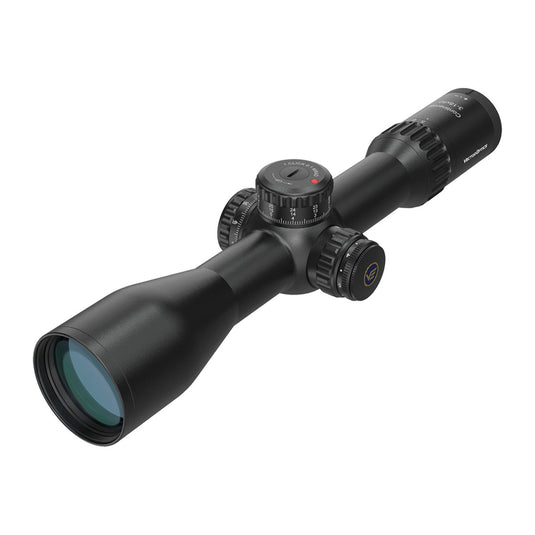
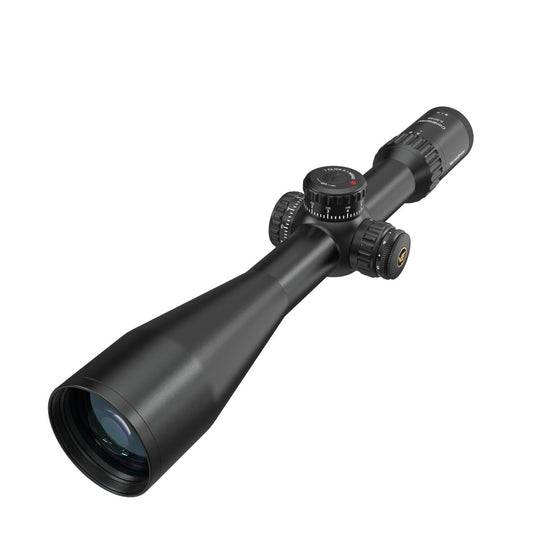
Rifle Scope: Reliable tracking, clear reticle, parallax adjustment, and optical clarity.
-
Ballistic Data: Accurate distance measurements and verified trajectory information.
-
Environment: Wind, air density, terrain, and shooting angle.
Small errors become more noticeable at longer distances. While static shooting allows more time to evaluate conditions, PRS adds time pressure, multiple targets, and changing positions.
2. Ballistics: Understanding Bullet Flight
Ballistics explains how a bullet behaves before and after leaving the barrel.
Internal vs. External Ballistics
Internal Ballistics covers everything from ignition to muzzle exit. Muzzle velocity consistency matters because variations affect flight time and predicted trajectory.
External Ballistics describes the bullet's flight through the air. Gravity, drag, wind, air density, and shooting angle all influence its path.
Ballistic calculators provide useful estimates, while a DOPE (Data on Previous Engagements) log helps document real-world observations and conditions.
Dialing vs. Holding
Rifle scopes offer two common ways to reference angular corrections:
-
Dialing: Using the adjustment turrets.
-
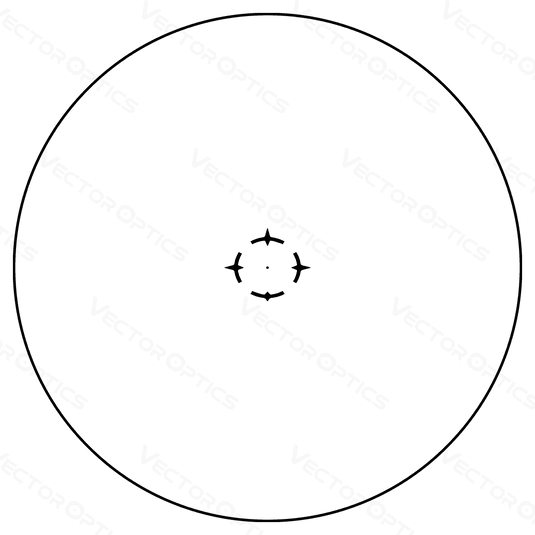
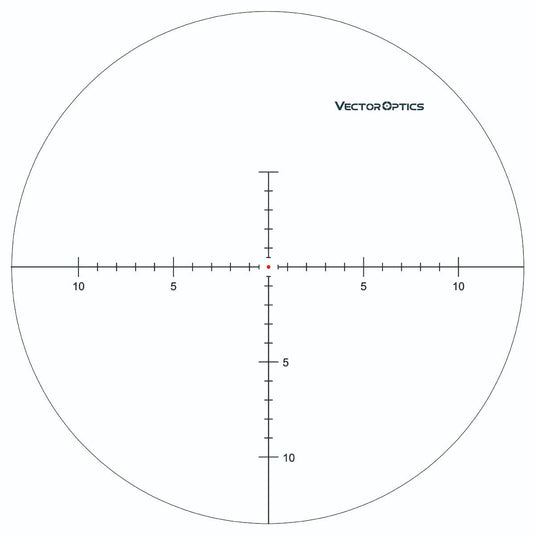
Holding: Using reference marks within the reticle.
Static long-range shooting often favors deliberate adjustments, while PRS competitors benefit from flexible reticle references, especially FFP Christmas-tree designs.
3. MOA vs. MIL: Which Is Better?
MOA (Minute of Angle) and MIL (Milliradian) are angular measurement systems. Neither is inherently more accurate.
| Measurement | At 100 Yards |
|---|---|
| 1 MOA | 1.047 inches |
| 1 MIL | 3.6 inches |
MOA is familiar to many traditional shooters, while MIL is widely used in PRS competition thanks to its decimal-based measurements.
The key is matching your reticle and turrets: MOA/MOA or MIL/MIL.
Learn more in MIL or MOA: How to Use Them.
For turret specifications, explore Turret Clicks Explained: Click Value & Adjustment Range.
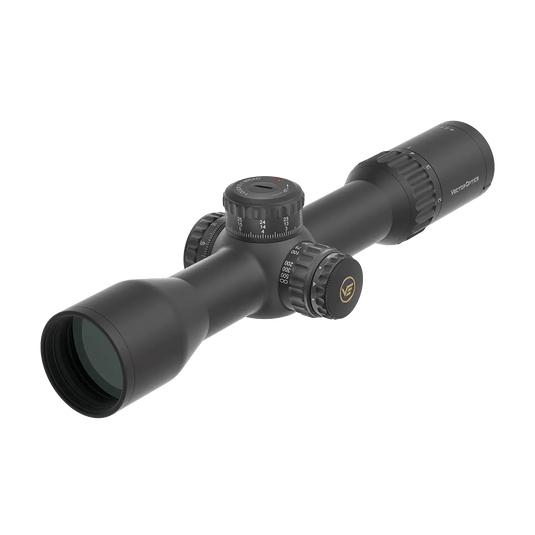
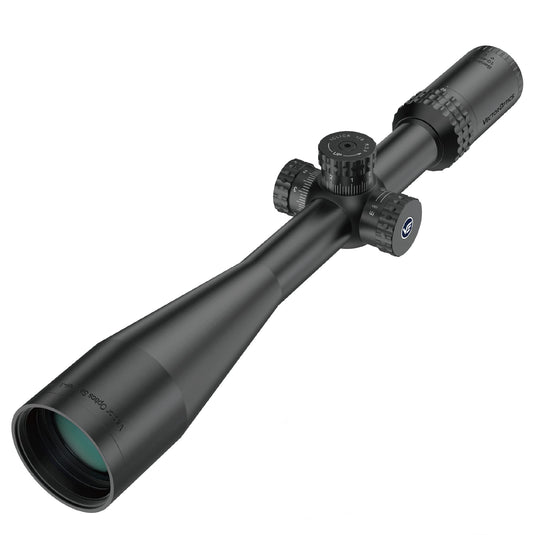
4. What Makes a Good Long-Range Rifle Scope?
More magnification doesn't always mean better performance. A reliable precision optic should balance several features:
-
Repeatable Turret Tracking: Consistent adjustments, zero stop, and locking turrets.
-
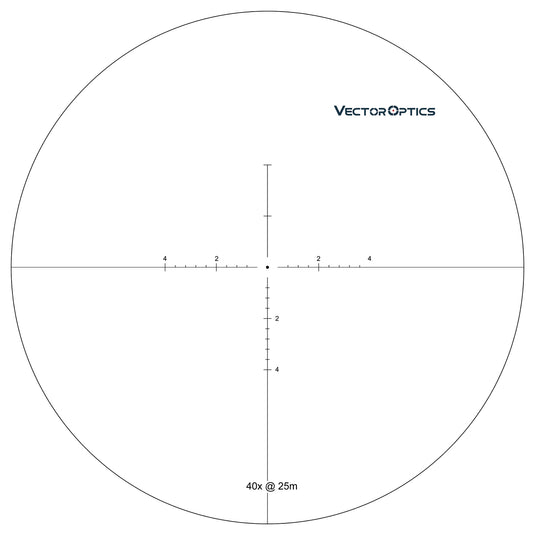
Functional Reticle: Clear elevation and windage references with matching turret units.
-
Adjustable Parallax: Reduces apparent reticle movement caused by changing eye position.
-
Optical Performance: Good resolution, contrast, field of view, and a comfortable eyebox.
-
FFP vs. SFP: FFP maintains reticle subtensions at every magnification, while SFP is typically calibrated at one specified setting.
Static Long-Range vs. PRS Shooting
| Static Long-Range | PRS Competition |
|---|---|
| Higher usable magnification | Flexible magnification |
| Fine aiming references | Clear FFP reticle |
| Precise turret tracking | Fast, readable adjustments |
| Detailed target visibility | Wide field of view and forgiving eyebox |
For more information on competition optics, check out our PRS Rifle Scope Guide.
Recommended Vector Optics Rifle Scopes
Tauron 6-24x50 HD MIL FFP Rifle Scope (SCFF-81)
Versatile 6-24x magnification with VTA-3 MIL FFP reticle, 0.1 MIL adjustments, zero stop, locking windage, and revolution indicator.
Continental 5-30x56 VEC MBR MPVO Rifle Scope (SCFF-41)
5-30x magnification, VEC-MBR FFP reticle, MIL hold references, and an LRZ turret system for long-range precision applications.
Continental x6 6-36x56 FFP Rifle Scope (SCFF-70)
High-power precision optic with VEC-MBR2 FFP MIL reticle, 0.1 MIL adjustments, zero stop, turret lock, and at least 31 MIL elevation adjustment.
Tauron 5-25x56 HD MIL FFP Rifle Scope (SCFF-71)
PRS-oriented features including VTA-8 MIL FFP Christmas-tree reticle, 0.1 MIL adjustments, locking windage, and at least 32 MIL elevation adjustment.
Tauron 3-24x56 ED FFP Rifle Scope (SCFF-33)
8x zoom range, ED glass, VTA-5 MIL FFP reticle, 0.1 MIL adjustments, zero stop, and 30 MIL elevation adjustment.
Choose your scope based on usable magnification, optical clarity, reticle design, and mechanical reliability rather than maximum power alone.
Explore more options in our Long-Range Shooting Collection.
5. Six Fundamentals of Long-Range Practice
A structured approach helps build a better understanding of precision shooting.
-
Know the Target: Understand target size, distance, and angular measurements.
-
Focus on Stability: Recognize how shooting positions affect consistency.
-
Understand Zero: Multiple-shot groups reveal more than individual impacts.
-
Study Distance Effects: Understand how trajectory and wind influence results.
-
Keep Reliable Records: Use DOPE logs to compare observations across sessions.
-
Explore PRS Challenges: Learn how position changes, target transitions, and time limits affect precision shooting.
Even a 200-yard range can help develop an understanding of precision fundamentals, although it cannot fully reproduce extended-distance centerfire ballistics.
6. Final Thoughts
Long-range precision shooting is about consistency, knowledge, and reliable equipment, not simply maximum magnification.
Understanding ballistics, choosing the right measurement system, and knowing what makes a dependable rifle scope provide a solid foundation for both recreational target shooting and PRS competition.
FAQ
1. Is a 1 MOA rifle accurate enough for beginners?
Generally, yes. A 1 MOA rifle and ammunition combination can suit many introductory targets, although target size, conditions, and repeatability matter.
2. MOA or MIL for beginners?
Both work. MIL is common in PRS competition, while MOA remains popular in traditional target shooting. Always match reticle and turret units.
3. How much magnification is needed at 600 yards?
It depends on the target and conditions. Static shooters may prefer 20x–30x+, while PRS competitors often use 12x–18x for better field of view and flexibility.
4. Is adjustable parallax necessary?
It's highly useful for precision shooting because it helps reduce apparent aiming errors caused by changes in eye position.
5. Can I learn long-range fundamentals at 200 yards?
Yes. Shorter ranges offer valuable opportunities to understand angular measurements, equipment consistency, and shooting fundamentals.
Best Sellers