
Field Target Beginner Guide: Start Smarter, Shoot Better
Field Target is a precision airgun sport that goes beyond basic target shooting. It combines accuracy, judgment, and outdoor awareness into one challenging discipline.
First introduced in the UK during the 1980s, Field Target has now become an international sport where shooters engage steel targets placed between 10 and 55 yards (9–50m).
What sets it apart is simple:
No marked distances, no shortcuts—just skill.
Shooters must estimate range, adjust their optics, and deal with wind and positioning, making Field Target one of the most demanding airgun formats.
Course Design: What to Expect on the Field
A Field Target course is built to test your ability—not your memory.
Typical setup includes:
- Distance variation: Targets positioned from 9 to 50 meters (10–55 yards)
- Lane structure: Around 30–50 targets, usually 1–2 per lane
- Natural environment: Targets hidden in foliage, placed on slopes, or set at awkward angles
Distances are never labeled, so every shot starts with estimation.
Target System: How Scoring Really Works
Field Target targets are made from metal/steel, designed to reset after each shot.
Common designs include:
- Animal silhouettes (rabbit, squirrel, bird)
- Simple shapes (circle, diamond, etc.)
Kill Zone Explained
The key scoring area is the kill zone:
- Size ranges from 9.5mm (3/8") → 50mm (2")
- Must be hit cleanly to knock the target down
- Hit without knockdown = no score
Scoring rule is binary:
- Knockdown = 1 point
- Anything else = 0

Core Skills You Need
Field Target is not just shooting, it requires multiple skills working together.
Distance Estimation
Rangefinders are not allowed. Shooters rely on reticle reference or visual judgment. Experienced competitors can estimate within ±0.5m at 40m.
Ballistic Adjustment
Once distance is known, adjust for:
- Elevation → bullet drop
- Windage → wind drift
Turret precision plays a critical role here.
Position Control
Different lanes may require different positions:
- Prone: Maximum stability
- Kneeling: Often supported
- Standing: Most difficult
- Sitting: Seats ≤ 6 inches
A shooting mat is often used for comfort and consistency.

Equipment Breakdown
Air Rifles
Most shooters use PCP (Pre-charged pneumatic) rifles for:
- Near-zero recoil
- Stable output (12–20 ft/lbs)
- Multi-shot capability
A Spring Gun class also exists for traditional setups.
Time Rules
Time pressure is part of Field Target:
- ~1 minute to set up
- ~1 minute per shot
Example: 5 shots = 6 minutes total
Timing begins once the shooter starts ranging.
Challenges in Field Target
Field Target combines several difficulties at once:
- No rangefinder allowed
- Complex terrain and visual deception
- Limited time per shot
- Very small kill zones
Even a small distance error can result in a miss.
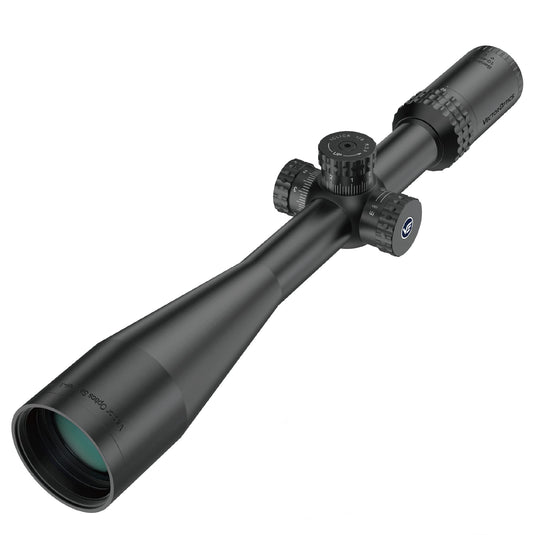
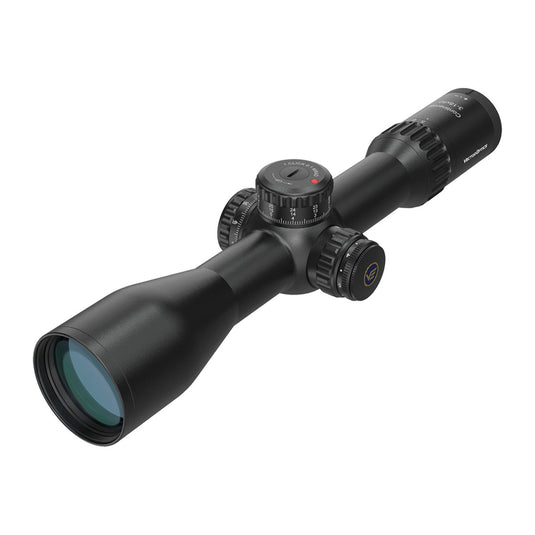
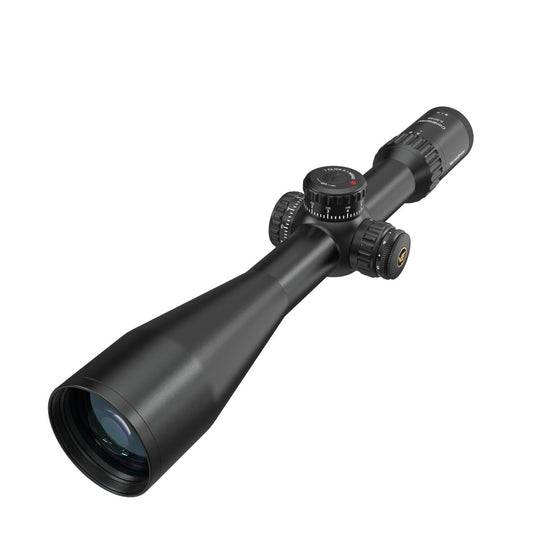
Scope Setup Guide for Field Target
Choosing the right scope is critical for Field Target performance.
Magnification
Recommended: 10–50x / 12–50x
High magnification improves range estimation using parallax.
Side Focus
Adjustment range: 7m → infinity
Faster and more practical than Adjustable Objective in Field Target use.

Turrets
Exposed/tactical turrets allow:
- Fast elevation and windage adjustments
- Quick adaptation between targets
Click Precision
Small targets require fine tuning:
- 1/8 MOA
- 1/10 MIL
Sidewheel Advantage
- More precise parallax control
- Allows distance marking before competition
Mounting Setup
- Medium/high rings for better head alignment
- Bubble level to prevent cant error
Second Focal Plane (SFP)
- Reticle size stays constant
- Better visibility at high magnification
- Magnification usually remains fixed in Field Target
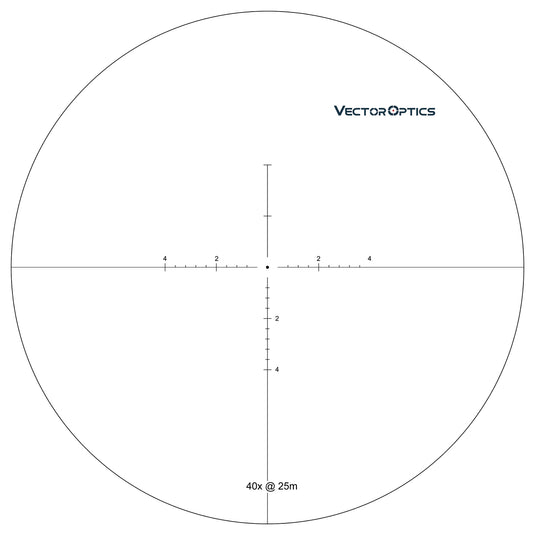
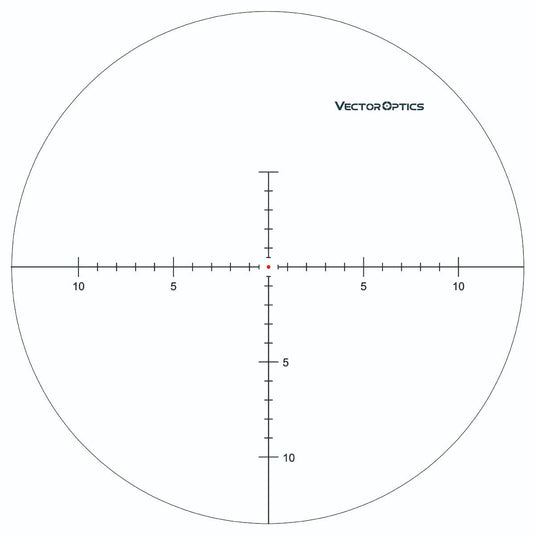
Reticle Choice
Keep it simple:
- Mil-dot
- G4 style
Thin reticles help avoid blocking small targets.
Optical Quality
At high magnification, optical performance becomes critical:
- Clear image
- Strong contrast
- Accurate parallax feedback
For more details on glass performance, check our blog.

Recommended Scopes
Continental x8 6–48×56 ED (SCOL-TE52 / SCOL-TM52)
- 8x zoom system for flexible magnification across varying distances
- 93% light transmission for bright and clear image performance
- 56mm objective lens for improved light intake and visibility
- 1/8 MOA / 0.05 MIL click value for precise elevation and windage adjustment
- VCO-6MOA / VCO-5MIL reticle for accurate rangefinding and holdover
- 0.1MOA / 0.03 MIL center dot for pinpoint aiming on small targets
- Side focus: 10 yards → infinity for precise parallax adjustment
-
Illumination included for better visibility in low-light conditions
Sentinel-X Series (SCOL-34 / SCOL-58)
- 10–40x magnification for mid- to long-range Field Target shooting
- 50mm objective lens for balanced brightness and size
- 1/8 MOA click value for fine-tuned shot correction
- COM-25M reticle for range estimation and target alignment
- Side focus: 10m → infinity for consistent image clarity across distances
Minotaur Series (High Magnification)
SCOL-36 / SCOL-39 / SCOL-37 / SCOL-40
- 10–50x / 12–60x magnification for extreme long-range precision and rangefinding
- 60mm objective lens for maximum brightness at high magnification
- 1/8 MOA click value for detailed and accurate adjustments
- Side focus: 10 yards → infinity for smooth and precise parallax control
- VETD-LR / VEMP-LR reticle for enhanced ranging capability
-
0.125–0.15 MOA center dot for precise aiming on small kill zones
Final Thoughts
Field Target is all about solving each shot.
You’re constantly:
- Estimating distance
- Adjusting your scope
- Managing position and timing
With the right setup, your shots become more consistent—and the whole experience becomes far more rewarding.
Best Sellers