
Red Dot Reticles Explained: Speed vs Precision in Real Shooting
Modern red dot sights give shooters more than just a single aiming point. Different reticle designs are built for different shooting habits—some help you react faster, others help you stay more precise when distance increases.
Once you understand how these shapes behave in real use, choosing an optic becomes much easier.

1. How Reticle Design Changes the Way You Shoot?
A reticle influences how your eye locks onto the target.
In real shooting, it mainly affects three things:
- how quickly you “see” the dot
- how much of the target stays visible
- how steady your aim feels during movement
That’s why reticle choice often feels more important than magnification or body size.
1.1 2 MOA Dot: Clean and Distance-Friendly
A 2 MOA dot is small by design, and that’s exactly its advantage.

It doesn’t take up much space on the target, which makes it easier to aim precisely when shooting farther away or at smaller objects. This is also why it’s commonly paired with rifles and magnifiers.
Instead of being flashy, it focuses on control and clarity.
Where it works best
- Mid to long-distance shooting
- Rifle setups with magnification
- Precision-focused scenarios
- Situations where shot placement matters more than speed
What to expect
It can feel slightly less “instant” when you’re moving fast between targets, but it rewards you with cleaner aiming at distance.
Recommended 2 MOA Red Dot Sights
- Maverick-II Plus 1x22 Red Dot Sight Solar Power (SCRD-PS12/PD12)
- Nautilus 1x30 2 MOA Red Dot Scope Double Reticle (SCRD-D26)
- Scrapper 1x25 2 MOA Red Dot Sight (SCRD-46)
- Scrapper 1x22 2 MOA Red Dot Sight (SCRD-45)
- Frenzy FA 17x20 GMR Green Dot Sight EDC (SCRD-GM68)
- Frenzy F3 26x32 MRT Red Dot Sight (SCRD-M79)
- Frenzy FLEX 24x29 MRT Red Dot Sight (SCRD-M76)
- Frenzy FA 18x22 Enclosed MRT Red Dot Sight (SCRD-M75)
1.2 3 MOA Dot: The Most Natural Balance
The 3 MOA dot is the “default comfort zone” for many shooters.

It’s visible enough to pick up quickly, but not so large that it blocks detail. That makes it easy to use across different distances without thinking too much about the reticle itself.
This is why it shows up so often on pistol optics.
Where it fits best
- Everyday carry pistols
- General range shooting
- Defensive use
- Mixed-distance training
Why people stick with it
It doesn’t force a trade-off. You get enough speed for close work and enough control for normal accuracy.
1.3 6 MOA Dot: Fast Reactions First
A 6 MOA dot is built for situations where reaction time matters more than precision detail.

Because the dot is larger, your eye finds it almost instantly, especially during fast movement or recoil-heavy shooting.
It feels more aggressive and direct compared to smaller dots.
Best suited for
- Competition shooting (IPSC / USPSA)
- Close-range drills
- Fast target transitions
- High-tempo defensive scenarios
Trade-off in real use
You gain speed, but you lose some fine aiming detail at distance. Most shooters using 6 MOA already accept this compromise.
Recommended models
- Frenzy FM 1x20x28 6 MOA Red Dot Sight (SCRD-40)
- Frenzy FLEX 1x24x29 GenII 6 MOA Red Dot Sight (SCRD-76)
- Frenzy Plus F3 1x22x32 Quick Release 6 MOA Red Dot Sight (SCRD-65)
- Frenzy F3 6 MOA Red Dot Sight (SCRD-79)
1.4 Circle Reticle: Instinctive Target Framing
The circle reticle changes the aiming logic completely.
Instead of focusing on a point, you simply place the target inside the ring. It feels more instinctive and less technical.
This makes it especially useful when things happen quickly and you don’t want to overthink alignment.
Works well in
- Close-range shooting
- Fast engagement scenarios
- Situations requiring quick visual confirmation

Limitation
It’s not built for precision work, especially at distance where a clear point of aim is needed.
1.5 Circle-Dot Reticle: Practical Hybrid Setup
The circle-dot reticle combines two ideas: fast framing and precise aiming.
The ring helps your eye find the target quickly, while the center dot gives you a clear reference point when you need accuracy.
It’s one of the most flexible reticle styles in modern optics.
Where it performs well
- Close to mid-range shooting
- Mixed-use scenarios
- Training and general shooting setups

What to expect
It adds more visual elements to the sight picture, but in exchange you get more versatility.
1.6 Crosshair Reticle: Structure and Control
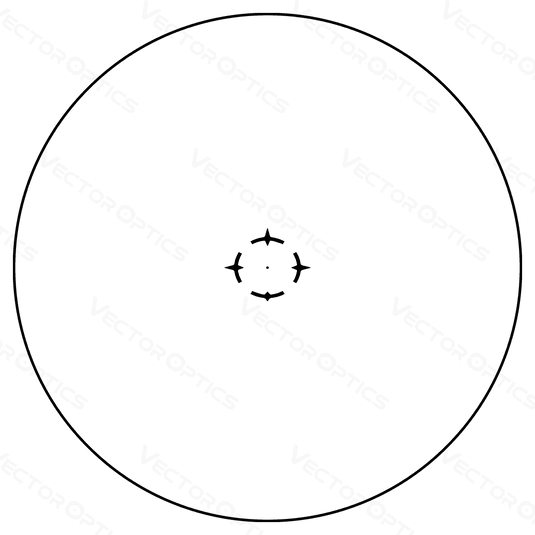
A crosshair-style reticle is more about structure than speed.
It gives directional reference lines that help you understand alignment better, especially when you’re trying to slow down and make a controlled shot.
Best use cases
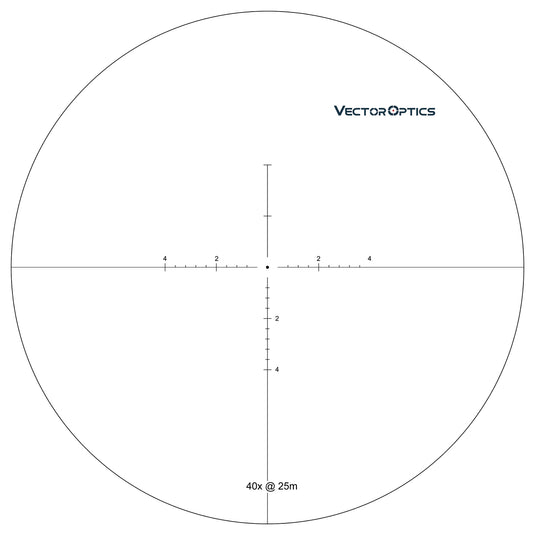
- Precision-oriented shooting
- Controlled firing sequences
- Stability-focused setups

Limitation
It takes slightly longer for the eye to process compared to simple dot-based designs.
1.7 Quick Comparison View
| Type | Speed | Precision | Visibility | Best For |
|---|---|---|---|---|
| 2 MOA | Medium | High | Medium | Rifles / precision |
| 3 MOA | Balanced | Balanced | Balanced | Everyday use |
| 6 MOA | Fast | Medium-Low | High | Competition / CQB |
| Circle | Very fast | Low | Very High | Close range |
| Circle-Dot | Fast | High | High | General use |
| Crosshair | Medium | High | Structured | Controlled shooting |

2. Why Multi-Reticle Systems Matter in Modern Shooting Environments?
Modern shooting rarely stays in a single pattern. In one moment, the focus is speed; in the next, precision becomes more important. Because of this constant shift, traditional single-reticle optics can feel limited when conditions change quickly.
Multi-reticle systems were developed to solve exactly this problem.
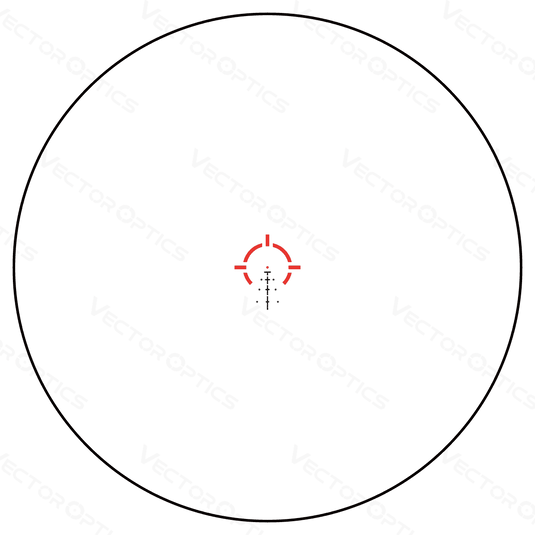
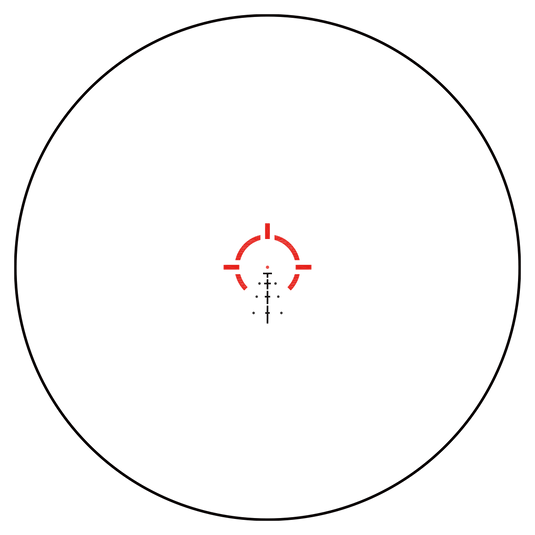
Instead of locking the shooter into one fixed aiming style, these optics allow multiple reticle patterns to coexist in a single system. Dot, circle, and crosshair-style options can be used within one optic, giving shooters the ability to adjust their sight picture based on the situation.
This approach reflects a broader trend in modern optics design: flexibility over limitation. Rather than choosing one compromise, shooters can switch between different visual references depending on distance, pace, or shooting environment.
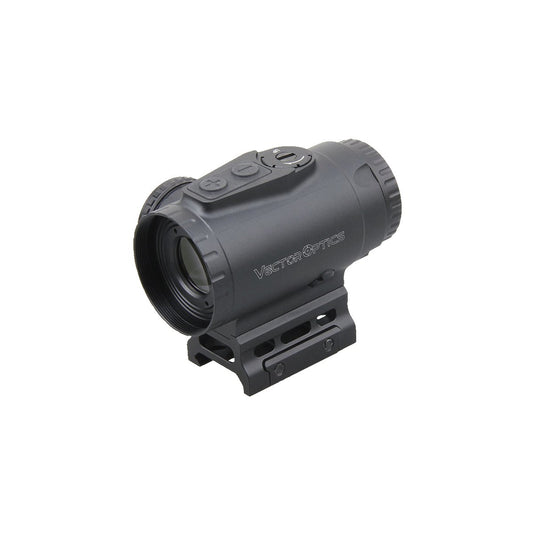
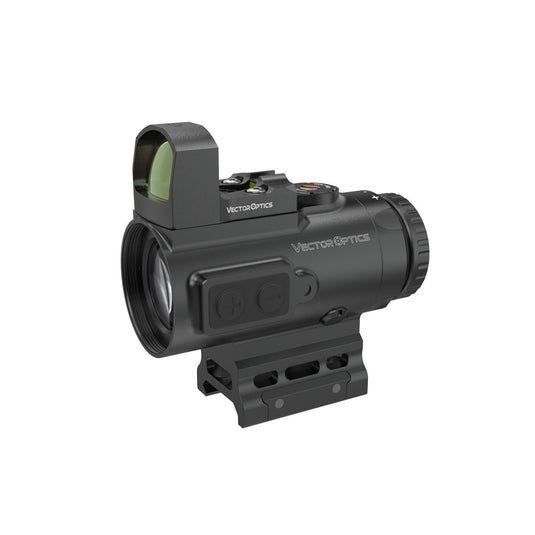
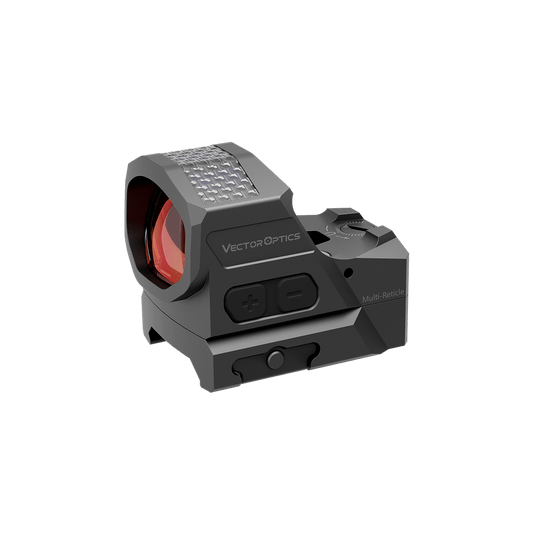
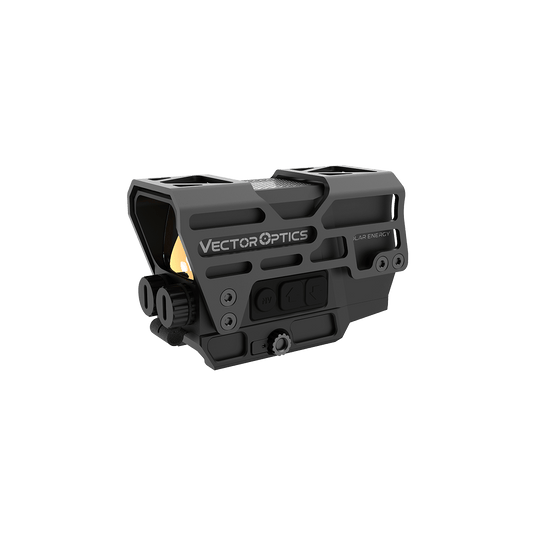
Products such as the Frenzy FA 18x22 Enclosed MRT Red Dot Sight (SCRD-M75), Frenzy FLEX 24x29 MRT Red Dot Sight (SCRD-M76) and Frenzy F3 26x32 Multi Reticle Red Dot Sight (SCRD-M79) are built around this idea, integrating multiple reticle configurations into a single platform. This improves adaptability in both training and real-world shooting scenarios.

For a deeper breakdown of product development and system design, you can refer to:
Frenzy MRT Red Dots — Multi Reticle, More Control
2.1 Key Benefits of Multi-Reticle Systems
● One optic supports multiple shooting styles without hardware changes
● Eliminates the need to commit to a single reticle before use
● Adapts more easily to different shooting distances and environments
● Provides more flexibility compared to traditional single-reticle designs
2.2 Illumination Color and Real-World Visibility
Reticle performance is not only about shape—color also plays a role in how quickly the aiming point is perceived.

In bright outdoor environments, green illumination often provides stronger contrast against natural backgrounds such as grass, trees, and sunlit terrain. This can make the reticle easier to pick up at a glance in high-light conditions.
In addition, some users—especially those with mild astigmatism—report that green illumination appears slightly sharper and more defined compared to red, reducing perceived blur or distortion.
Prefer a green dot? We’ve got you covered with some multi-reticle green options:
- Frenzy FA 17×20 GMR Green Dot Sight EDC (SCRD-GM68)
- Frenzy FLEX 24×29 GMR Green Dot Sight (SCRD-GM76)
- Frenzy F3 26×32 6MOA GMR Green Dot Sight (SCRD-GM79)
Bright days, busy backgrounds, or fast target transitions—these green dot sights are built to keep your aiming picture crisp, bright, and flexible.

3. What Is the Real Value of Multi-Reticle Systems in Practical Shooting?
Every red dot reticle type is built around a specific strength.
Smaller dots lean toward precision, larger dots prioritize speed, and circle or crosshair designs help improve visual guidance and alignment. Each has its place depending on how and where the shooter is operating.
The advantage of modern multi-reticle red dot optics is that they remove the restriction of choosing only one behavior. Instead of adapting your shooting style to the optic, the optic adapts to you.
This makes it easier to respond to changing distances, speeds, and shooting environments without switching equipment.
Best Sellers