
A Beginner’s Guide to F-Class Shooting
F-Class shooting is one of the most detail-driven styles of long-range rifle competition. It is all about staying calm, reading the wind, building a stable setup, and sending rounds with serious precision at extended distances.
The sport was developed in Canada in the 1990s by George Farquharson, and the “F” in F-Class comes from his name. Today, F-Class has become a favorite for shooters who enjoy precision rifles, high-magnification optics, ballistic knowledge, and the challenge of chasing tiny groups far downrange.
1. What Is F-Class Shooting?
F-Class is a prone long-range rifle competition, usually shot from 300 to 1,000 yards. Shooters lie on the ground and fire from a supported position, using either a bipod or a front rest while aiming through a magnified rifle scope.
Compared with faster shooting sports, F-Class feels more like a precision puzzle. Every shot depends on body position, rifle stability, ammunition consistency, scope adjustment, and the shooter’s ability to judge wind and mirage.
F-Class is mainly divided into two categories: F-Open and F-TR.
1.1 F-Open
F-Open is the more flexible, “open” side of F-Class. Shooters have more freedom in rifle configuration, support equipment, and cartridge choice.
Many competitors use efficient, low-recoil cartridges such as 6mm BR, 6 Dasher, 6XC, and 6.5mm cartridges. These rounds are popular because they can offer strong ballistic performance, flatter trajectories, and less wind drift.
F-Open rifles often use heavy barrels, light competition triggers, wide stocks, and front rests for maximum stability. The maximum rifle weight is 22 lb, including optics.
1.2 F-TR
F-TR, short for F-Target Rifle, is more restricted and usually more beginner-friendly. This class is limited to .223 Remington or .308 Winchester cartridges.
Instead of a front rest, F-TR shooters use a bipod and rear bag. The rifle setup is simpler, and the maximum rifle weight is 18.18 lb, including optics.
Because the gear rules are tighter, F-TR can be a more accessible way to enter F-Class competition without jumping straight into a fully custom rifle build.
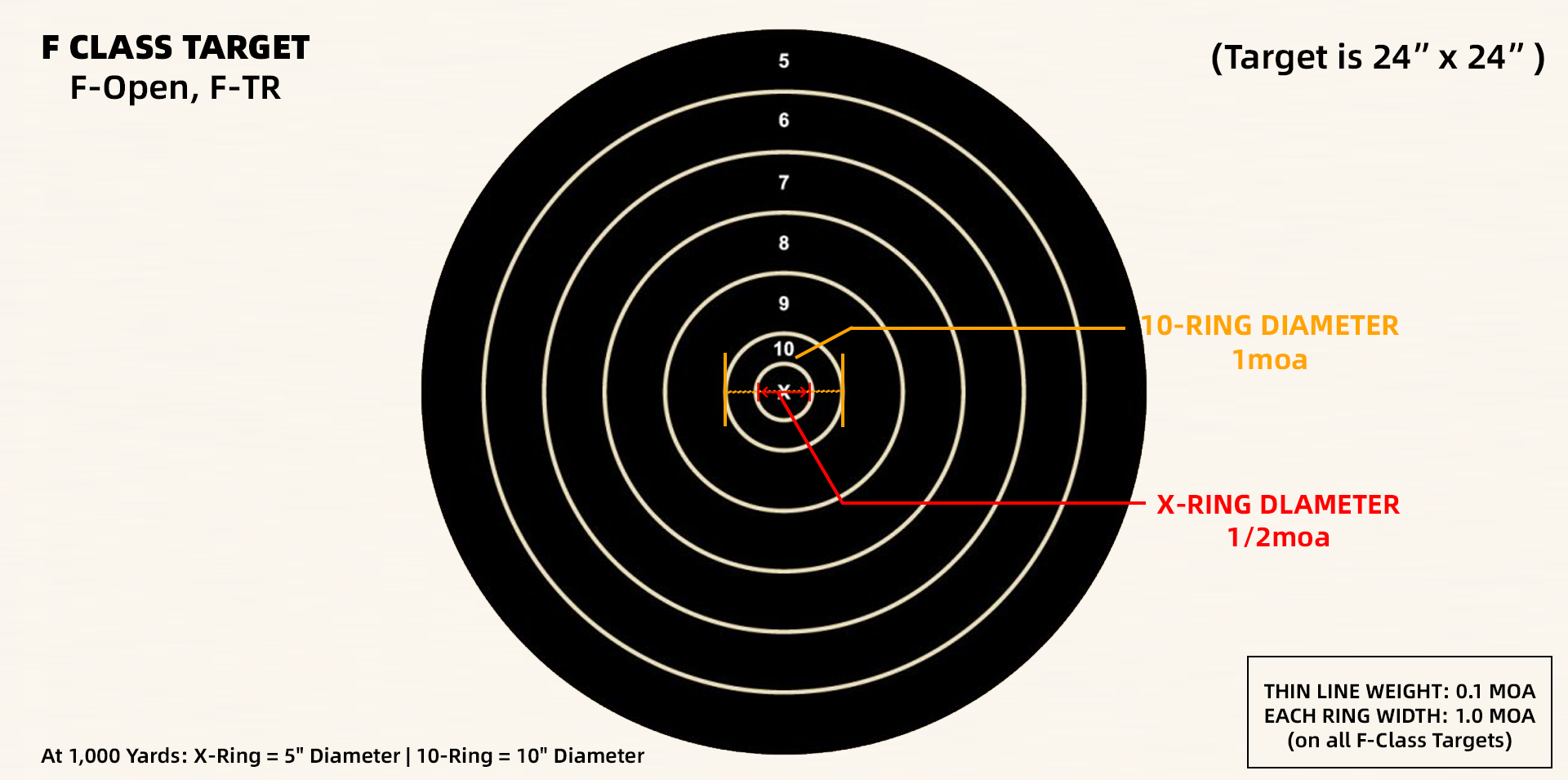
F-Class targets are extremely demanding. Modern targets often use 1 MOA 10-rings and 1/2 MOA X-rings. At 1,000 yards, the X-ring is only about 5 inches wide. That means small mistakes in wind calls, trigger control, or ammo consistency can quickly show up on target.
2. What Rifles and Equipment Are Used in F-Class?
F-Class gear is all about one thing: repeatable precision. The rifle, support system, ammunition, and accessories all need to work together to keep every shot as consistent as possible.
Rifles & Cartridges
Most F-Class rifles are bolt-action rifles built with heavy barrels, match triggers, and stable stocks or chassis systems.
F-Open shooters usually focus on high-BC, low-recoil cartridges that help reduce wind drift and keep the rifle easier to control.
F-TR shooters are limited to .223 Remington or .308 Winchester, which keeps the class more standardized and skill-focused.
Support Equipment
F-Open shooters commonly use precision front rests or sandbags to create a rock-solid shooting platform.
F-TR shooters use bipods with rear bags, making the setup lighter, simpler, and closer to a practical rifle format.
Common Accessories
Wind meters help shooters measure real-time wind conditions.
Bubble levels help prevent rifle cant, which can shift impacts at long range.
Spotting scopes are useful for reading conditions and tracking impacts.
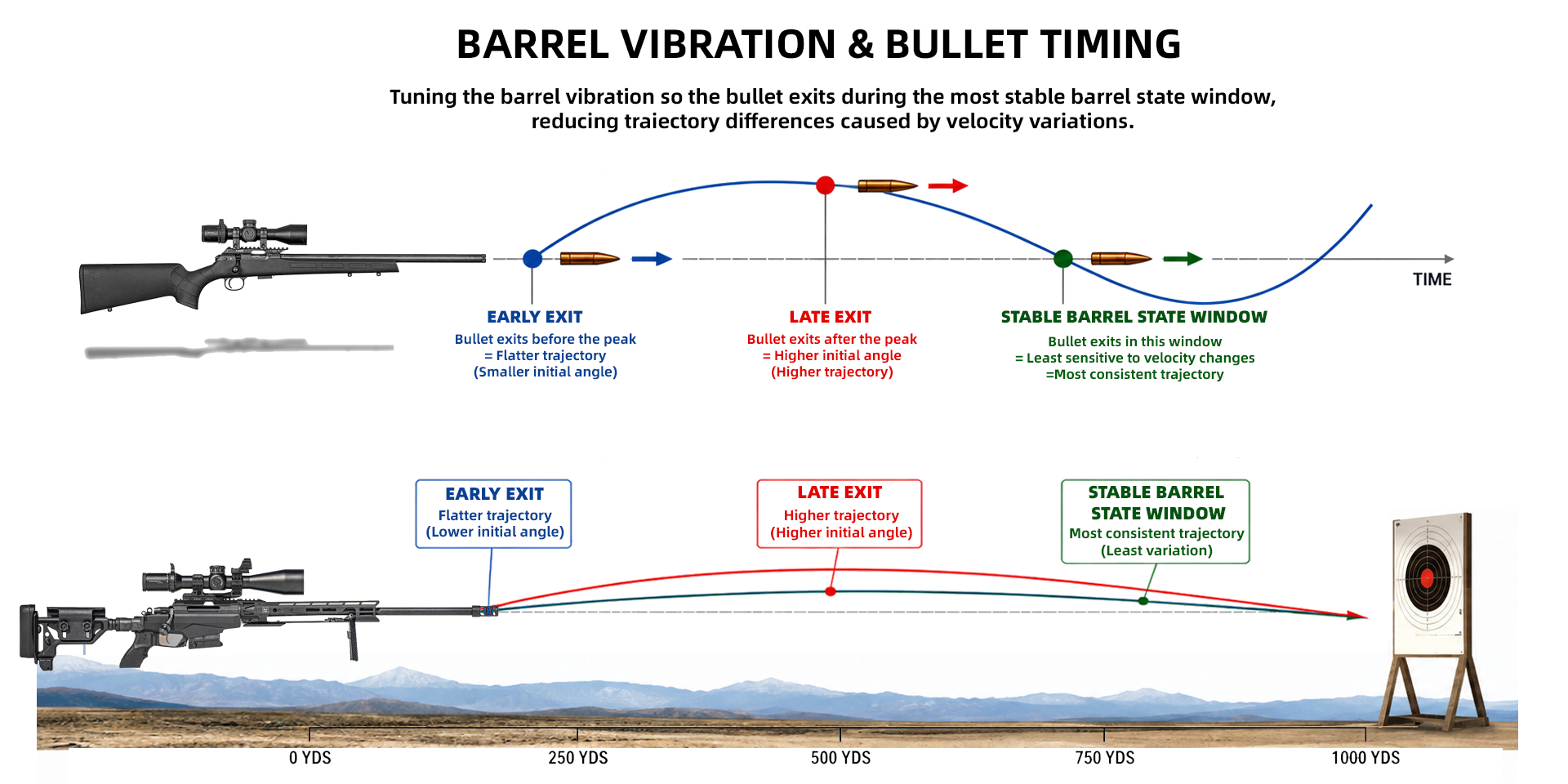
Barrel tuners can be used to fine-tune barrel harmonics and improve consistency.
3. Why Wind Reading Matters So Much?
In F-Class, wind reading is not a side skill. It is one of the main skills.
At 1,000 yards, even a mild crosswind can push a bullet far away from the intended point of impact. A high-BC bullet helps, but it does not make wind disappear.
Experienced shooters constantly watch the environment before and during each shot. They pay attention to mirage, wind flags, grass movement, and lighting changes. These small clues help them decide when to fire and when to wait.
One common misunderstanding is that wind matters most near the target. In reality, a small wind shift early in the bullet’s flight can create a much bigger change by the time the bullet reaches the target.
That is why timing matters so much. Great F-Class shooters do not just aim well. They know when the conditions are stable enough to take the shot.
At higher levels, shooters also tune ammunition and barrel harmonics so the bullet exits the muzzle at a more consistent point in the barrel’s vibration cycle. That helps reduce vertical spread and keeps groups tighter.
In short, F-Class is part shooting sport, part physics lesson, and part patience test.
4. How to Choose a Rifle Scope for F-Class?
A good rifle scope is one of the most important parts of an F-Class setup. Since the targets are small and the distances are long, shooters usually want high magnification, precise adjustments, and dependable tracking.
4.1 Key Scope Requirements
Most F-Class shooters prefer scopes with serious magnification power, such as 8–32x, 10–40x, or even 12–42x for 1,000-yard matches.
Some shooters also use fixed high-power scopes in the 20x–36x range, especially in benchrest-style setups.
A 30mm or 34mm tube is often preferred because it can provide more room for elevation adjustment. For a deeper look at scope tube sizes, check out our guide: 1 Inch, 30mm, or 34mm: Which Scope Tube Actually Fits You?
For elevation travel, many shooters look for at least around 40 MOA or an equivalent MIL range.
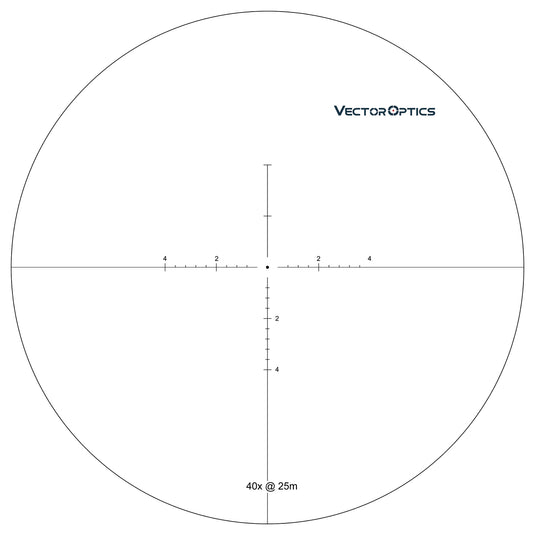
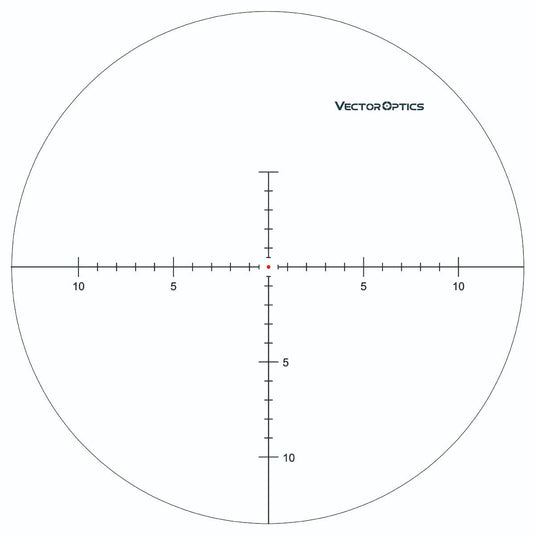
SFP optics with fine reticles are commonly favored because the reticle stays visually clean at high magnification. Fine crosshairs, floating center dots, and simple MOA/MIL hash-mark reticles are all popular choices for precise aiming.
A strong F-Class scope should also offer accurate tracking, repeatable return-to-zero, crisp turret clicks, and clear adjustment markings. When every click matters, the scope needs to feel predictable and reliable.
4.2 What F-Class Shooters Look For
Premium scopes such as Nightforce Competition or Leupold FX-3 are often seen in F-Class, but modern high-magnification options are also becoming highly competitive.
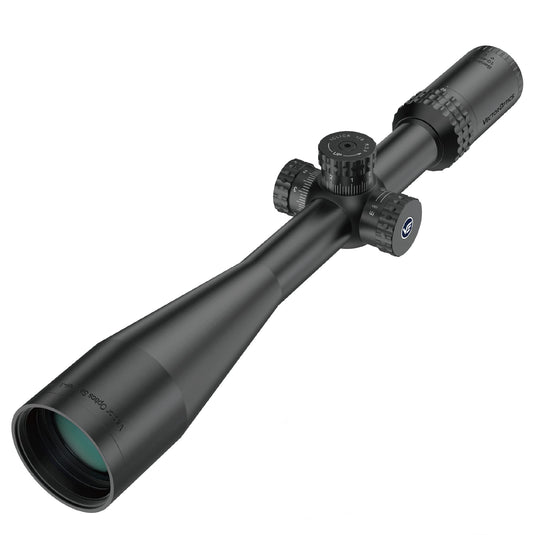
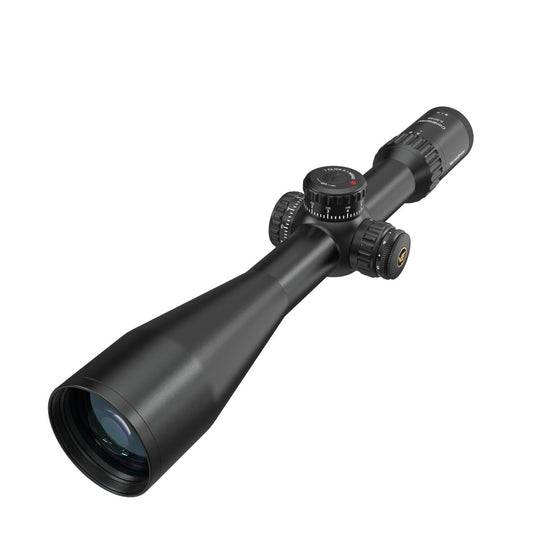
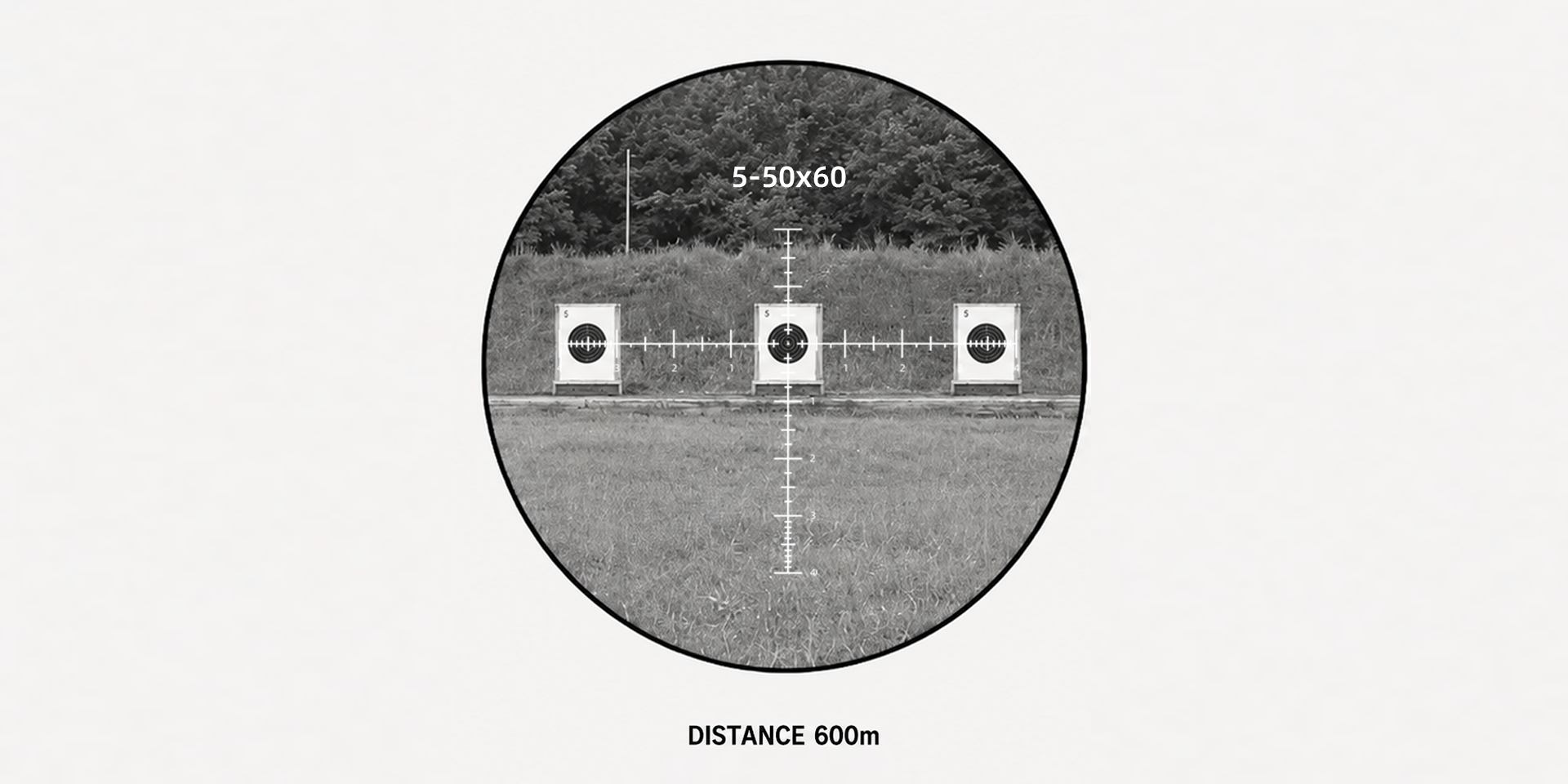
The Tauron 5-50x60 ED SFP Long-Range Rifle Scope (SCOL-69), for example, brings a wide 5–50x magnification range, a 34mm tube, over 120 MOA elevation adjustment, and a fine 0.05 mil illuminated center dot. These features make it a strong option for shooters who want both detailed target visibility and precise aiming control.
Key Features:
-
Ultra-wide 5–50x magnification for spotting and precision aiming
-
34mm tube system for extended elevation adjustment
-
Fine SFP reticle with 0.05 mil center dot for less target obstruction
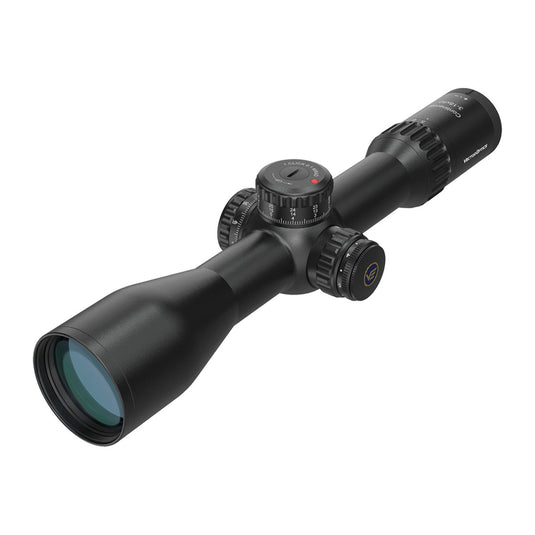
The Continental x8 6-48x56 ED Long Range SFP Rifle Scope (SCOL-TE52) and Continental x8 6-48x56 ED HPVO MIL SFP Rifle Scope (SCOL-TM52) also offer high magnification for long-range precision. Here is a quick comparison:
| Feature | Tauron 5-50x60 ED SFP Rifle Scope | Continental x8 6-48x56 ED MIL SFP Rifle Scope | Continental x8 6-48x56 ED MOA Rifle Scope |
|---|---|---|---|
| Magnification | 5-50x | 6-48x | 6-48x |
| Focal Plane | SFP | SFP | SFP |
| Objective Lens | 60 mm | 56 mm | 56 mm |
| Linear Field of View @ 100 yd | 24.6-2.46 ft @ 100 yards | 20.5-2.57 ft @ 100 yards | 20.5-2.57 ft @ 100 yards |
| Linear Field of View @ 100 m | 8.2-0.82 m @ 100 meters | 6.8-0.85 m @ 100 meters | 6.8-0.85 m @ 100 meters |
| Angular Field of View | 4.7-0.47° | 3.89-0.48° | 3.89-0.48° |
| Tube Size | 34 mm | 30 mm | 30 mm |
| Elevation Travel | ≥23 MIL | 14 MIL | 48 MOA |
| Click Value | 0.05 MIL | 0.05 MIL | 1/8 MOA |
| Reticle | Fine SFP reticle | MIL DCR reticle | MOA DCR reticle |
| Center Dot | 0.05 MIL | 0.01 MIL | 0.1 MOA |
| Side Focus | 10 m to infinity | 10 yds to infinity | 10 yds to infinity |
| Waterproof | IP67 | IP67 | IP67 |
| Shockproof | 1000 G | 1000 G | 1000 G |
|
Weight |
951 g / 33.55 oz |
807 g / 28.5 oz |
807 g / 28.5 oz |
|
Reticle |
|
|
|
5. What Makes F-Class So Addictive?
F-Class is addictive because it is brutally honest. The target does not care how expensive your rifle is or how confident you feel behind the scope. Every shot shows exactly how well you handled the fundamentals.
It rewards shooters who enjoy preparation, discipline, and small improvements. Better handloads, cleaner trigger control, smarter wind calls, and a more stable position can all show up downrange.
Whether someone starts with a factory .308 rifle and a bipod or a fully customized F-Open rifle, the challenge stays the same:
Place tiny groups on distant targets while dealing with gravity, wind, mirage, and barrel behavior.
That mix of science, skill, and pressure is what keeps shooters coming back.
FAQ
Q1. Do you need an expensive rifle to start F-Class?
No. Many top competitors use custom rifles, but beginners do not need to start there.
A factory heavy-barrel rifle from brands such as Remington, Ruger, Savage, or Tikka can be enough for local matches when paired with quality ammunition and good fundamentals.
In many cases, wind-reading skill, consistency, and practice matter more than owning the most expensive setup.
Q2. What is the difference between F-Class and Benchrest shooting?
Both sports focus on precision, but they are not the same.
Benchrest shooting is usually fired from a bench with specialized front and rear rests, often at shorter distances.
F-Class is fired from the prone position at longer distances, commonly 600 to 1,000 yards. Because of the longer range, wind reading becomes a much bigger part of the game.
A simple way to look at it: Benchrest is about maximum mechanical precision from a bench, while F-Class blends precision rifle shooting, ballistics, and environmental reading from the ground.
Best Sellers