
USPSA Basics Explained: A Guide for Beginners
USPSA (United States Practical Shooting Association) is the largest practical shooting organization in the United States and also serves as the official U.S. region of IPSC. At its core, this sport isn’t just about shooting accurately — it blends speed, precision, power factor, and real-time decision-making under pressure.
In USPSA matches, shooters move through dynamic, stage-based courses while engaging both paper and steel targets under strict time limits. Every stage feels different: you’re constantly moving, switching targets, and making split-second choices about speed versus accuracy. Final scores are calculated using the USPSA scoring system and Hit Factor, which measures overall efficiency.
This guide walks you through the essentials of USPSA shooting — from targets and scoring, to divisions, safety rules, disqualifications (DQ), classifier stages, classification system, and how matches actually run.
1. What Is USPSA Shooting?
USPSA is a timed, scored shooting sport where every stage presents a different challenge. There’s no fixed script — you adapt on the spot.
To perform well, you’ll need a mix of:
- Movement and footwork
- Recoil control
- Fast target acquisition
- Efficient reloads
- Smart stage planning
But the real key isn’t just speed. It’s finding the right balance between going fast and staying accurate. That balance is exactly what Hit Factor is designed to measure.
1.1 USPSA Targets
USPSA stages typically use two types of targets: paper and steel.
1.1.1 USPSA Paper Targets
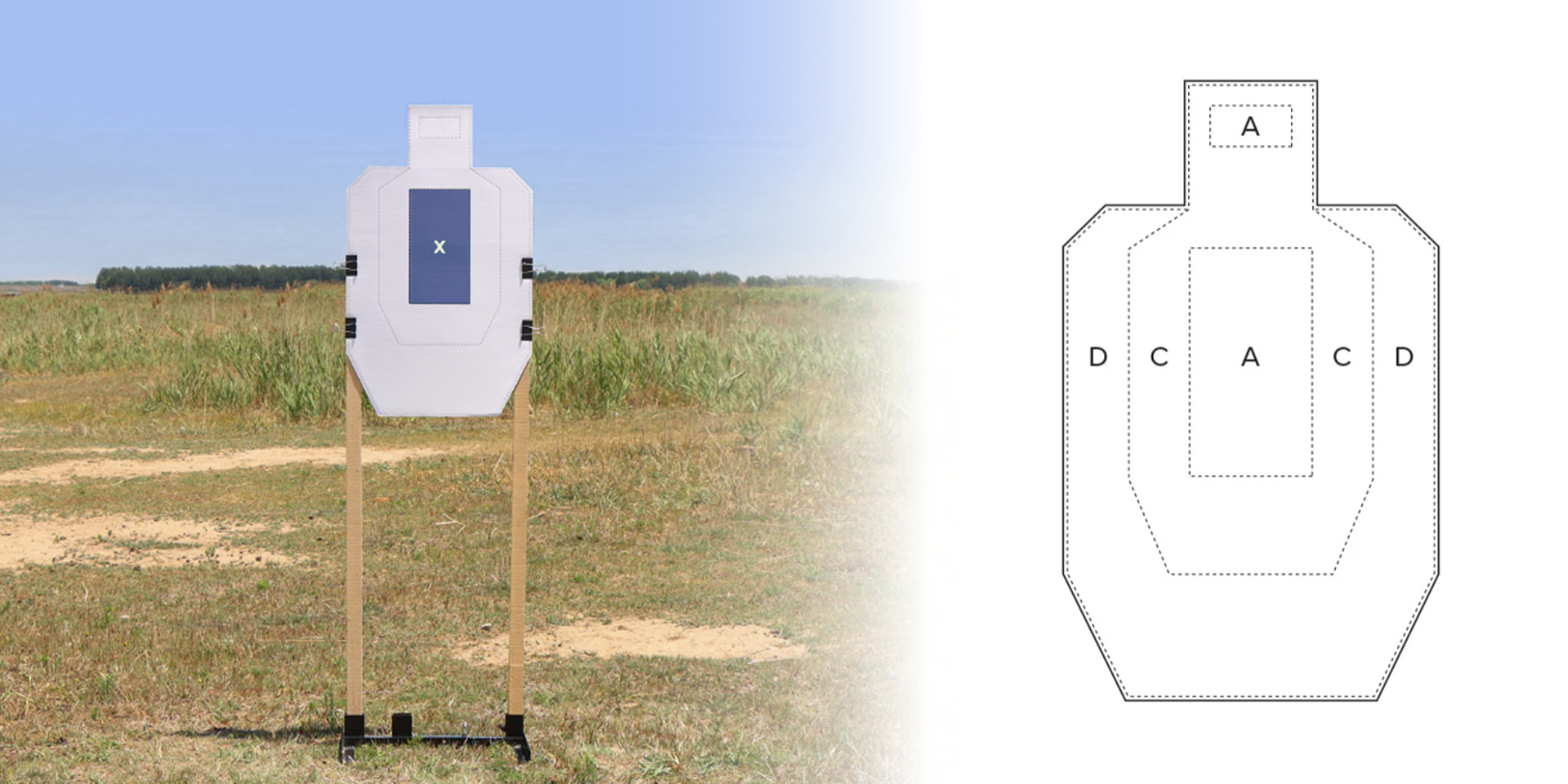
The standard USPSA cardboard target is a silhouette-style target with three scoring zones: A, C, and D.
If you’ve searched for USPSA target size or dimensions, this is the classic IPSC-style target people are referring to.
USPSA Target Dimensions (Paper Target):
-
Approx. 18” wide × 30” tall
-
A-zone: roughly 6” × 11”
-
C and D zones surround the A-zone
The A-zone is the highest-value scoring area.
1.1.2 USPSA Steel Targets
Steel targets are the “instant feedback” part of USPSA, including:
- Round plates
- Falling poppers
- Mini steel targets
Steel targets must fall to score — there are no partial points.
1.2 USPSA Scoring System
Understanding USPSA scoring is essential to understanding the sport.
1.2.1 Hit Factor (The Core Idea)
USPSA scoring is based on Hit Factor:
Hit Factor = Total Points ÷ Time
Example: 100 points in 10 seconds = 10.0 HF
This system rewards shooters who can shoot fast without losing too much accuracy. In other words, controlled aggression is often better than perfection at a slow pace.
1.2.2 Minor vs Major Power Factor
USPSA rewards shooters who can manage recoil while maintaining speed and accuracy.
Minor Power Factor
- Usually 9mm
- Softer recoil
- Lower value for C and D hits
Scoring:
- A = 5
- C = 3
- D = 1
Major Power Factor
- Typically .40 S&W or .45 ACP
- Heavier recoil
- Higher reward for C and D hits
Scoring:
- A = 5
- C = 4
- D = 2
This means C and D hits are worth more points when shooting Major, rewarding shooters who manage the additional recoil. USPSA determines Minor or Major using the Power Factor formula:
Power Factor = (Bullet Weight × Velocity) ÷ 1000
Minimum thresholds:
-
Minor: 125
-
Major: 165 (varies by division)
Different USPSA divisions may allow Minor, Major, or both, depending on their equipment rules.
2. What Are USPSA Divisions?
One of the most important things to understand in USPSA shooting is how divisions work, as they allow shooters to compete with similar equipment under specific firearm and gear rules. USPSA includes a wide range of divisions, such as Production, Carry Optics, Limited, Limited 10, Limited Optics, Open, Single Stack, Revolver, and PCC (Pistol Caliber Carbine).
However, in this guide, we will focus on the most popular and widely used divisions: Carry Optics, Limited Optics, Limited, Open, and Production.
2.1 Carry Optics
Carry Optics allows slide-mounted red dot sights.
The firearms must also come from the USPSA Production Gun List and remain mostly stock. Like Production, all firearms in this division use Minor scoring, typically with 9mm ammunition.
Popular guns include Glock 34 MOS, CZ Shadow 2 OR, SIG P320 X5 Legion, and Walther PDP Match.
2.2 Limited Optics
Limited Optics is a newer and rapidly growing division in USPSA. It allows slide-mounted red dot optics and high-performance pistols, including Single Action Only (SAO) 2011-style firearms, along with competition upgrades like magwells.
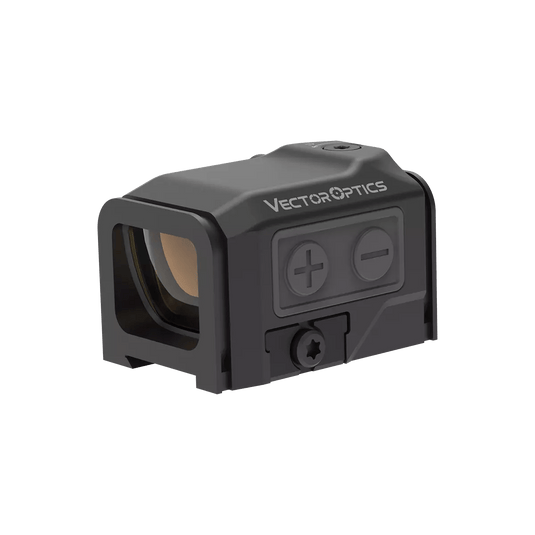
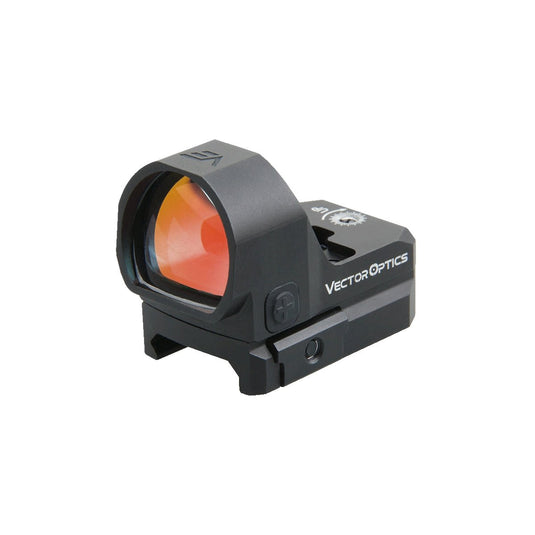
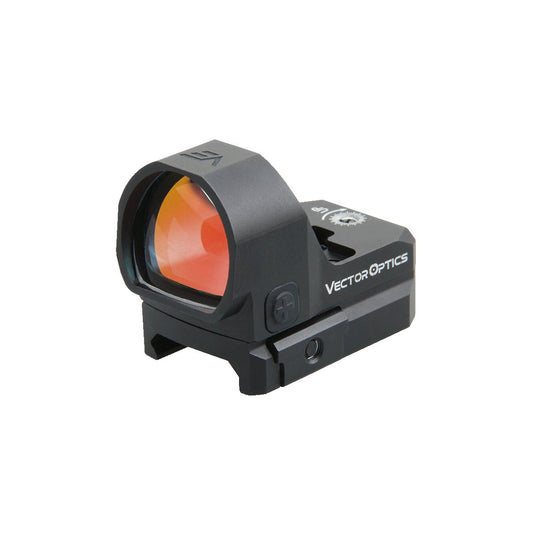
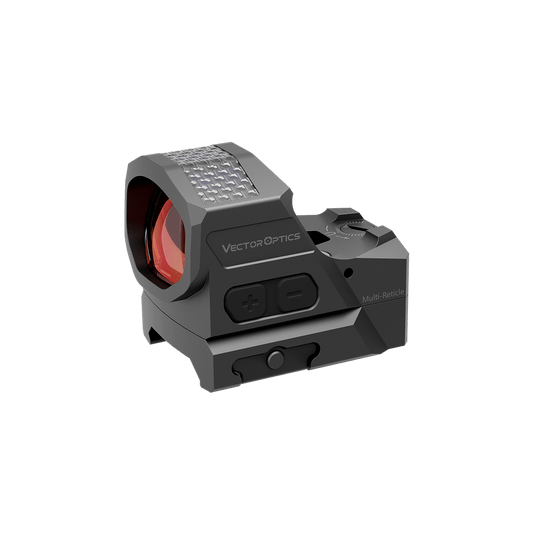
For example, the Vector Optics Frenzy FLEX Red Dot series offers compact slide-mounted optics suitable for Carry Optics and Limited Optics pistols, helping shooters maintain a clear sight picture while transitioning quickly between targets.
All firearms are scored using Minor power factor only, regardless of caliber. Magazine length is limited to 141.25 mm, similar to Carry Optics.
2.3 Limited
Limited allows more modification but no optics.
- Minor or Major scoring
- High-capacity magazines allowed
- Popular with 2011-style pistols
2.4 Open
Open Division allows the most advanced equipment in USPSA. Optics—including frame-mounted optics—compensators, and extended magazines are permitted, and competitors often use specialized race guns designed for maximum speed and recoil control.
Both Minor and Major power factor are allowed, with Major commonly preferred for its scoring advantage.
Open division competitors often use highly customized race guns based on the 2011 platform from brands such as Staccato, Atlas Gunworks, and Infinity Firearms.
2.5 Production
The Production Division is designed for mostly stock handguns with limited modifications. Firearms must appear on the official USPSA Production Gun List, and all guns are scored using Minor power factor.
Common pistols seen in USPSA Production include models such as the Glock 17, Glock 34, CZ Shadow 2, SIG Sauer P320, and Walther PDP.
Production is popular with new shooters because it allows them to compete with a relatively standard handgun without expensive upgrades.
To help you better understand the differences, the table below compares these divisions in terms of optics, power factor scoring, magazine rules, and typical firearms.
|
Division |
Optics |
Power Factor Scoring |
Magazine Rule |
Typical Firearms |
|
Carry Optics |
Slide-mounted red dot only |
Minor only |
Max 140mm magazine length |
Glock 34 MOS, Shadow 2 OR, Walther PDP |
|
Limited Optics |
Slide-mounted optic allowed |
Minor only |
Magazine length limited to 141.25 mm |
Staccato P, Atlas 2011 |
|
Limited |
Not allowed |
Minor or Major |
High-capacity magazines (≈140mm / 170mm) |
2011 pistols, Tanfoglio Stock II |
|
Open |
Slide or frame-mounted optics allowed |
Major & Minor (Major preferred) |
Up to 170mm magazine length |
Custom 2011 race guns |
|
Production |
Slide-mounted optic allowed |
Minor only |
Magazine length limited to 141.25 mm |
Glock 17, CZ Shadow 2, SIG P320 |
Want the full scoop on every USPSA division and which red dot works best? Dive into our Picking the Perfect Red Dot Sight for USPSA Divisions.
3. What Gear Do You Need?
To get started in USPSA, you’ll typically need:
- Competition belt system (often two-piece Velcro system)
- Strong-side holster (covers trigger guard)
- Magazine pouches
- Eye and ear protection
- Optic (for applicable divisions such as Carry Optics or Open)
Your USPSA holster must:
-
Retain the gun securely
-
Not point at your body while holstered
-
Follow division rules
Your USPSA belt setup matters for reload speed and efficiency.
Many modern USPSA competitors also choose compact pistol optics, such as the Vector Optics Frenzy Flex red dot series, designed for fast target acquisition and durability under high round counts.
4. When Do You Get Disqualified (DQ)?
Safety is always the top priority in USPSA matches. Violating any of the following rules can result in an immediate disqualification (DQ).
4.1 The 180 Rule
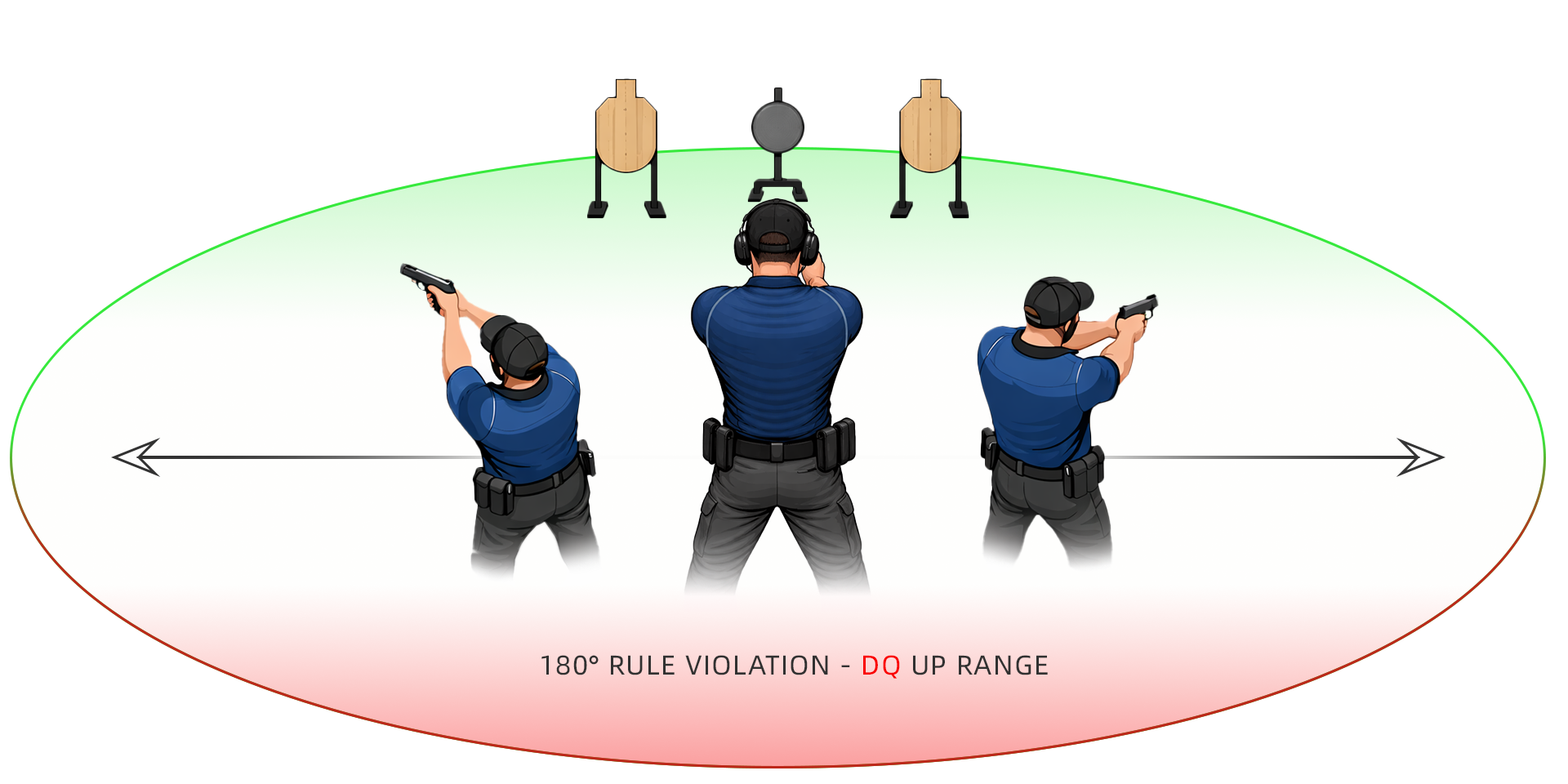
Your muzzle must never cross the imaginary 180-degree plane, usually aligned with the back berm. Crossing this line is an automatic DQ.
4.2 Finger on Trigger While Moving
Touching the trigger while moving or changing magazines is strictly prohibited to prevent accidental discharges and injuries.
4.3 Other Unsafe Actions
You can also be disqualified for:
- Dropping a loaded gun
- Accidental discharge
- Sweeping yourself or others
- Unsafe holstering
In USPSA shooting, following safety rules is not optional. It protects you, other competitors, and ensures fair competition.
5. Strategy: Calling Shots & Stage Thinking
As a beginner, you can start by learning to notice where your sights are when each shot breaks. Over time, you’ll develop the skill to “call your shots”, like advanced shooters, predicting where the bullet will hit and adjusting your strategy on the fly.
In USPSA competitions, you’ll often see top shooters:
-
Accept a C hit instead of waiting for a perfect A
-
Push speed on close targets
-
Slow down for partial or difficult targets
Sometimes sacrificing a bit of precision increases overall score. That’s practical shooting.
6. What Are Classifier Stages?
A USPSA classifier is a standardized stage used nationwide to measure a shooter’s skill. Everyone shoots the same course, so scores are directly comparable.
Each stage produces a Hit Factor, which is your score compared to a high-level benchmark known as the High Hit Factor (HHF). Your best six classifier scores determine your current classification.
Classifier stages are often included in local USPSA matches, giving beginners a way to track improvement and see how they rank against other shooters.
However, never try to “game” the system by re-shooting classifiers to raise your class. USPSA classification is meant to reflect your true skill, and deliberately manipulating scores is unfair and not allowed. Focus on consistent practice and proper performance to improve legitimately.
7. How Does the USPSA Classification System Work?
Your USPSA classification shows your skill level and tracks progress from beginner to advanced, helping you improve and compete fairly. Below, we’ll break down what the classes are and how your classification is calculated.
7.1 What Is the Classification System?
USPSA classification is how the organization measures a shooter’s skill and progress. Every competitor starts without a class and earns a classification by shooting official USPSA classifier stages.
Classes are:
-
D – Beginner
-
C – Intermediate
-
B – Competent
-
A – Advanced
-
Master (M) – Highly skilled
-
Grand Master (GM) – Elite
This system gives shooters a clear path to improve, ensures fair competition with others of similar skill, and helps track progress over time.
7.2 How Is Your Classification Calculated?
-
Classifier Stages: Shooters compete in standardized courses designed to test accuracy, speed, and gun handling.
-
High Hit Factor (HHF): Each stage has a benchmark score (HHF), based on the top 97th percentile of elite shooters.
-
Percentage & Ranking: Your score divided by HHF gives a percentage, which determines your class.
-
Best 6 of 8 Rule: Your current class is calculated using the best 6 scores of your most recent 8 classifiers, with at least 4 scores for an initial classification.
-
Updated System: USPSA rewards consistent performance rather than one-off “hero-or-zero” scores.
In short, the classification system shows where you stand, highlights areas to improve, and charts your path from D class beginner to Grand Master.
8. What Are USPSA Matches Like?
Matches range from:
- Local club matches
- Regional competitions
- National championships
A typical match includes:
- 4–8 stages
- 100–200+ rounds
- A mix of movement-based challenges
Most shooters start locally, where the environment is usually very beginner-friendly.
9. Why USPSA Feels So Addictive
USPSA is more than shooting — it’s a mix of:
- Movement
- Decision-making
- Pressure control
- Equipment tuning
Every stage is a new problem to solve, requiring shooters to balance speed, accuracy, and decision-making under pressure.
As shooters progress, many upgrade their pistols with competition gear such as improved triggers, extended magazines, and slide-mounted red dot optics like the Vector Optics Frenzy Flex to improve target acquisition speed.
Whether you compete with a stock Production pistol or a fully built Open race gun, the fundamentals remain the same: Balance speed and accuracy. Stay safe. Think before you shoot.
For those ready to take their USPSA shooting to the next level, check out our Picking the Perfect Red Dot Sight for USPSA Divisions. It breaks down every division, shows which optics are allowed, and helps you pick the best red dot for your setup.
FAQ
01 What is the difference among IPSC, IDPA and USPSA?
Many beginners compare IPSC vs IDPA vs USPSA.
IDPA stands for International Defensive Pistol Association, while IPSC stands for International Practical Shooting Confederation.
The table below highlights the main differences between these shooting disciplines.
|
IPSC |
IDPA |
USPSA |
|
|
Primary Focus |
International practical shooting balance of speed, accuracy, and power |
Defensive realism and concealed carry skills |
Speed and competition |
|
Stage Style |
Freestyle stage planning |
More rule-driven stage procedures |
Freestyle stage planning |
|
Round Count |
Moderate to high round counts |
Lower round counts |
Higher round counts |
|
Equipment Rules |
Structured divisions but still competition-focused |
Stricter concealment rules |
More equipment freedom |
Overall, IPSC and USPSA are very similar in structure and competition style, as USPSA is the official U.S. region of IPSC, while IDPA takes a more defensive-oriented approach.
02 Is USPSA Beginner Friendly?
In most cases, yes. As long as you understand the basic safety rules, can safely draw and reload, and are willing to learn, most clubs are happy to welcome new shooters. Many local matches even offer orientation sessions to help beginners get comfortable with the process.
You don’t need to be fast when you start. In USPSA, safety always comes first, and speed develops over time as you gain experience and confidence.
03 Which Pistols Do USPSA Beginners Typically Use?
Many new competitors start USPSA with reliable and widely available pistols. Some of the most common models seen at local matches include:
• Glock 17 / Glock 34
• CZ Shadow 2
• SIG Sauer P320
• Walther PDP
These pistols are popular because they offer good reliability, manageable recoil, and strong aftermarket support for competition upgrades.
04 Four Common Mistakes New USPSA Shooters Make?
1.Waiting until you feel “fully prepared” to shoot your first match
Many beginners delay their first match, but the best way to learn is to just go shoot. As long as you understand basic firearm safety, most clubs are beginner-friendly.
2.Avoiding strong shooters at local matches
Instead of staying in your comfort zone, try to squad with experienced shooters or GMs. Watching how they plan stages and manage movement can accelerate your learning.
3.Trying to game the classifier system
Some shooters attempt to raise their class by repeatedly shooting classifiers. USPSA classifications are meant to reflect real skill progression, not manipulated scores.
4.Thinking better gear will make you a better shooter
New guns and accessories won’t replace fundamentals. Focus on learning to use your current firearm well before upgrading equipment.
Best Sellers