
How to Sight in Your Rifle Scope
Just mounted a new optic on your rifle? The first thing you need to do is zero it. Whether you’re a newbie or a seasoned hunter, knowing how to sight in your scope is the key to making sure your shots actually hit where you aim.
1. What Does “Zeroing a Scope” Mean?
Zeroing a scope means aligning where your crosshair points with where the bullet actually hits.
When you look through a scope, the crosshair shows your aiming point. But without zeroing, your bullets could land anywhere near it.
In other words, zeroing matches:
- Point of Aim (POA): Where your crosshair is aimed
- Point of Impact (POI): Where the bullet actually lands

Once these two line up at your chosen distance, your scope is officially zeroed.
Some high-end scopes have a Zero Stop feature. Imagine you zero at 100 yards and then adjust for 200 or 300 yards—Zero Stop lets you dial back to your original 100-yard zero without overshooting.
2. Why Do You Need to Zero a Scope?
You might wonder, “Why not just aim and shoot?”
Here’s the deal: scopes aren’t perfectly aligned with the barrel.
- The line of sight is straight
- The bullet’s path curves due to gravity
Zeroing adjusts the scope so the bullet crosses your line of sight at a set distance—usually something like 100 yards. That intersection is your zero distance.

3. What You Need Before Zeroing
Before you start, make sure your setup is stable and safe:
- A rifle with a mounted scope
- Stable support (bench rest, bipod, or sandbags)
- A clear target
- Measuring tools
- Safe shooting environment

Pro tip: Start with a mechanical or laser bore sight to roughly align your scope. It saves ammo during your first shots.
Also, use the ammo you’ll normally shoot for zeroing. Consistency matters.
Make sure your scope is properly mounted. Tighten screws to the manufacturer’s specs—too loose, and your zero drifts; too tight, and you risk damaging the scope.
Bullet trajectory can appear confusing at first, but our detailed guide provides a clear explanation of how scope adjustments interact with bullet flight.
4. Step-by-Step Scope Zeroing
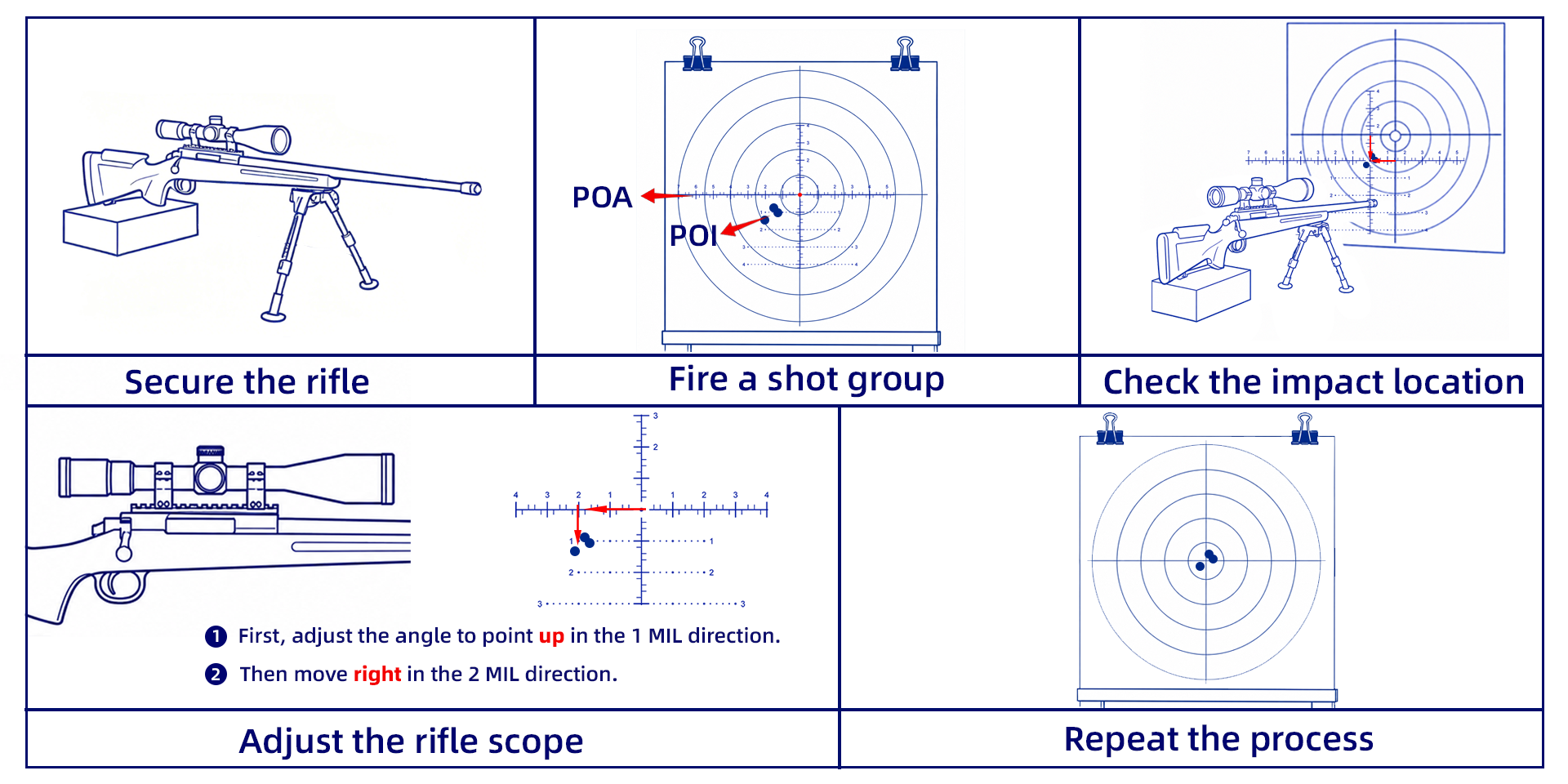
Zeroing is basically a cycle: shoot → observe → adjust → repeat.
Step 1: Secure Your Rifle
Place your rifle on a stable support. Use a laser bore sight or visually bore sight for an initial rough alignment.
Step 2: Fire a Shot Group
Aim at the center of your target and fire 3-5 rounds. Grouping helps you see the average point of impact, not just one shot.
Step 3: Check the Impact
Look at where the group landed relative to your aiming point. The group center is what matters.
Step 4: Adjust Your Scope
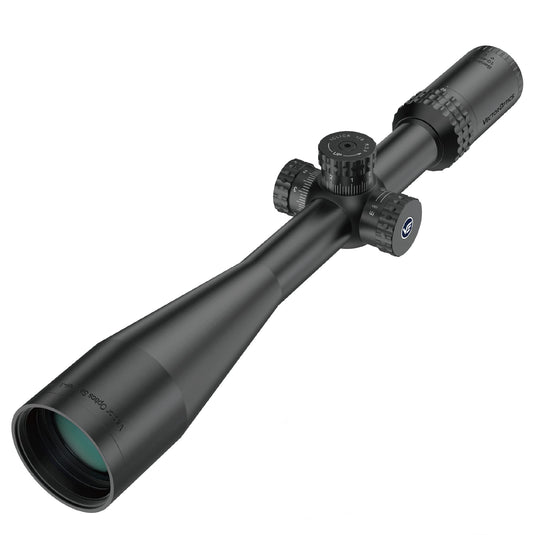
Scopes usually have two knobs: Elevation (up/down) and Windage (left/right).
-
Shots high → turn elevation down
-
Shots right → turn windage left
If your scope uses ¼ MOA clicks, calculate how many clicks are needed based on inches off at your zero distance. MRAD scopes let you calculate in mils.
After adjusting, shoot another group to see if the POI moved closer to your POA.
Step 5: Repeat
Keep shooting, observing, and adjusting until your bullet group centers on your target.
5. How to Know Your Scope is Zeroed
Your scope is properly zeroed when:
- Shot groups are consistent
- Bullet impacts match your aiming point
- Results stay reliable over multiple shots
Fire one final confirming group. For precision rifles, a group within ~1 MOA (about 1 inch at 100 yards) is ideal. Advanced shooters may do a box test to verify turret accuracy.

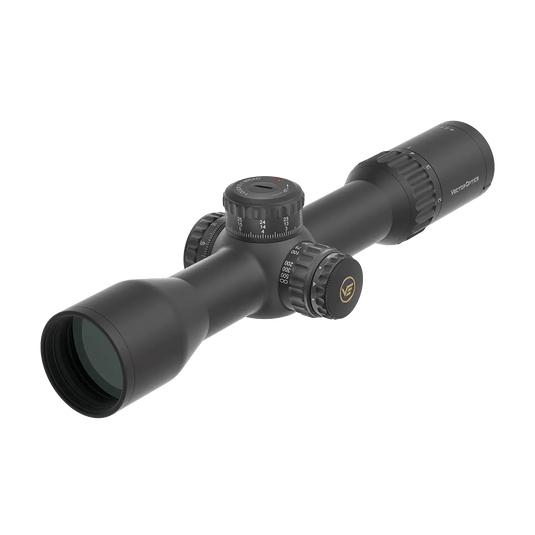
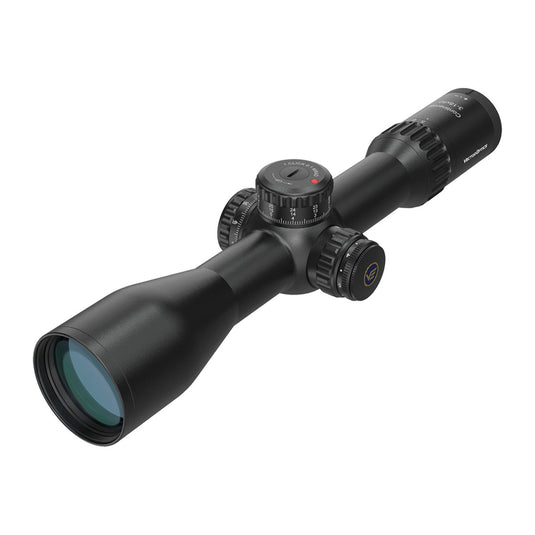
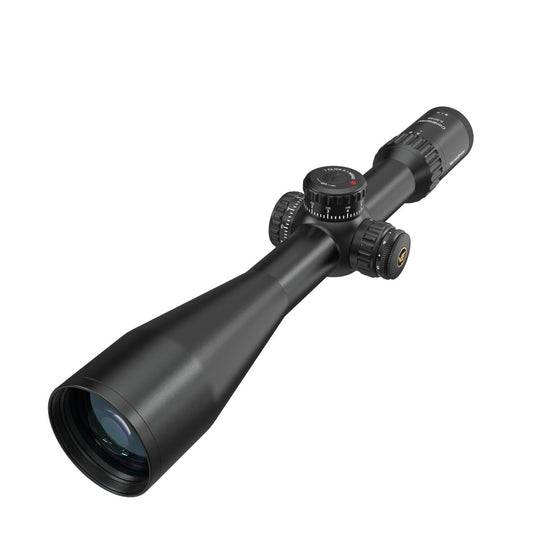
Looking for the right optic before you start zeroing? The Continental Series includes LPVO, MPVO, and long-range rifle scopes featuring German Schott HT glass, precise turrets, and reticle options for hunting, PRS, and competition shooting.
6. Common Zeroing Mistakes
Even pros slip up sometimes:
- Adjusting after every shot → wait for the group average
- Unstable shooting position → movement skews results
- Turning knobs the wrong way → double-check markings
- Large adjustments at once → small tweaks are safer
- Parallax not set correctly → can shift perceived aim
- Ignoring barrel heat → hot barrels change POI
- Ignoring environmental factors → wind, temp, and altitude affect bullets
Avoiding these will make zeroing faster and more accurate.
FAQ
Q1: What distance should I zero my scope?
100 yards is most common. Some shooters use 50 or 200 yards depending on ammo or ballistic tables.
Q2: How many shots are needed to zero?
3-5 shots per group give a reliable average.
Q3: How often should I re-zero?
Whenever you remove the scope, hit the rifle hard, switch ammo, or adjust mounts.
Q4: What is Zero Shift?
Zero Shift happens when the scope no longer aligns perfectly after mounting or impact. Secure mounting and checking screws reduces this.
Q5: Do FFP and SFP scopes zero differently?
Nope—the process is the same. The difference is in the reticle:
- FFP: reticle scale accurate at any magnification
- SFP: reticle accurate only at a specific magnification (usually highest)
Best Sellers