
Choosing the Right Prism Scope: 1× vs 3× vs 4×
Prism scopes have quickly become a go-to option for many shooters—and it’s not hard to see why.
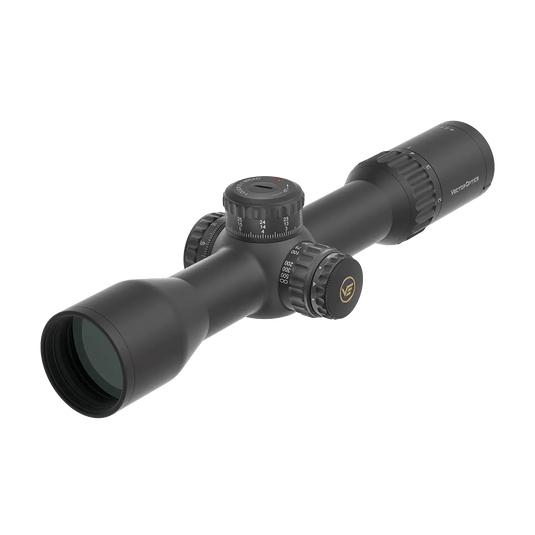
They offer a sharper reticle than red dots, better optical clarity, and a more consistent sight picture, especially for users with astigmatism. Sitting between a traditional scope and a red dot, they bring together compact size and dependable performance.
But once you get into prism optics, one question always comes up: should you choose 1×, 3×, or 4×?
The answer isn’t just about magnification—it’s about how you actually shoot.
How Do 1×, 3×, and 4× Prism Scopes Compare?
On paper, the difference is simple: magnification level. In practice, it changes how fast you react, how much you see, and how far you can effectively engage.

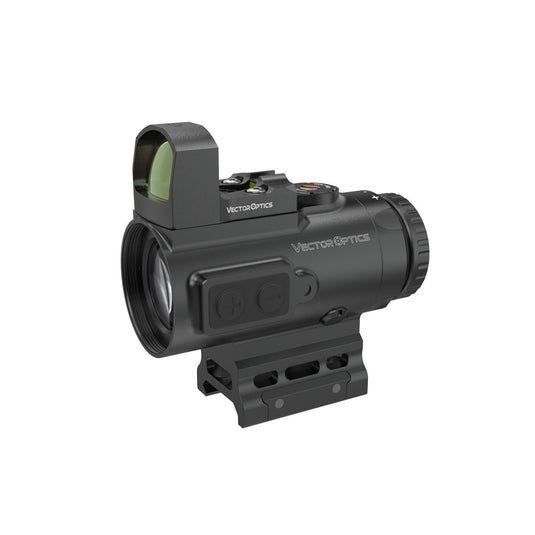
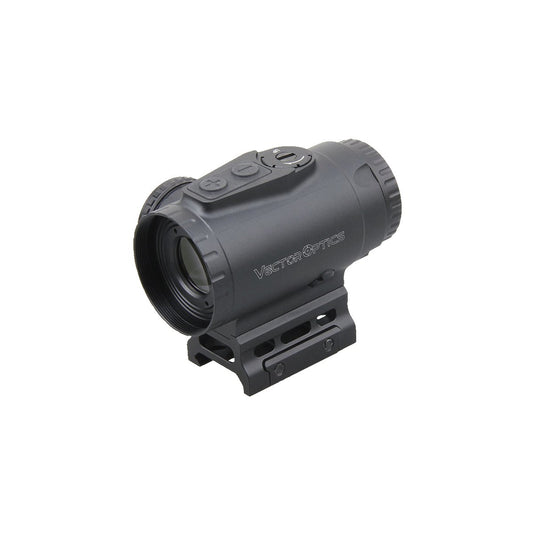
A 1× prism scope keeps things natural. There’s no magnification, so what you see matches your surroundings. This makes target acquisition quick and intuitive, especially in dynamic situations.
As you move up to 3× and 4×, the focus shifts. You gain more detail at distance, which helps with identification and shot placement, but your field of view narrows and transitions become more deliberate.
For many shooters, the decision often comes down to whether they value speed and awareness, or detail and reach.
When Should You Use a 1× Prism Scope?
A 1× prism scope fits naturally into close-range shooting.
Inside 100 yards, it feels fast, clean, and easy to use. There’s no need to adjust to magnification, which makes it especially effective when targets appear quickly or when movement is involved.
In realistic setups—whether it’s training, range time, or practical use—most engagements tend to stay within this kind of distance. That’s where a 1× optic feels the most comfortable.
It can still stretch further when needed, but its strength is really in how effortlessly it handles closer scenarios. That balance of speed and simplicity is what makes it such a common starting point for many setups.

When Should You Choose a 3× or 4× Prism Scope?
As distance increases, magnification starts to show its value.
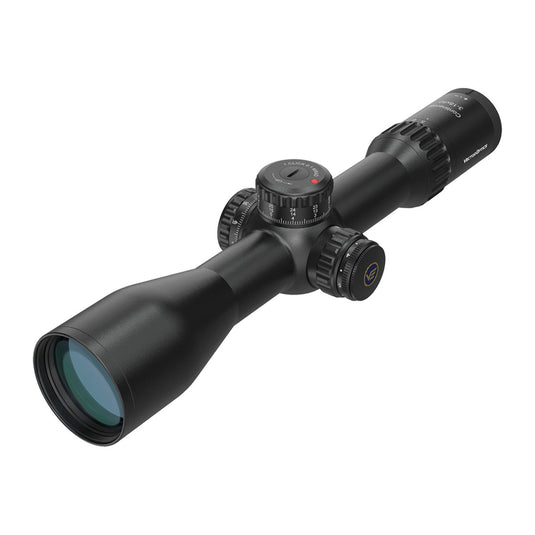
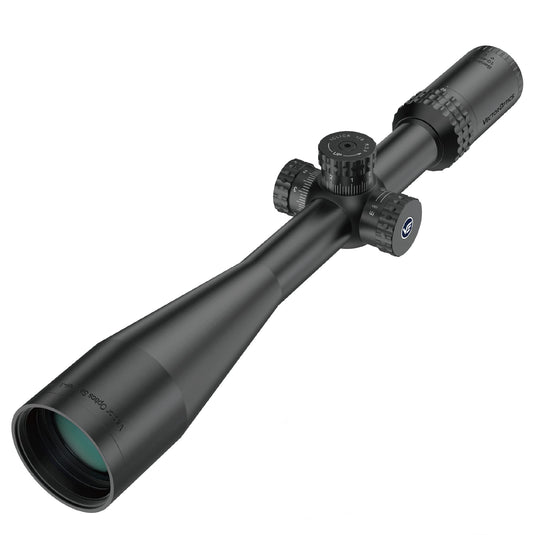
With 3× or 4×, targets become easier to read, and shot placement becomes more controlled. This is useful for mid-range shooting, hunting, or any situation where identifying details matters.
That said, the trade-offs are always there. A narrower field of view means you see less of what’s happening around the target, and transitions between multiple targets can take more time.
For shooters who spend more time engaging at distance, the added clarity is worth it. For others, it may feel like more than they actually need.
Understanding the VEPS-MBR Reticle
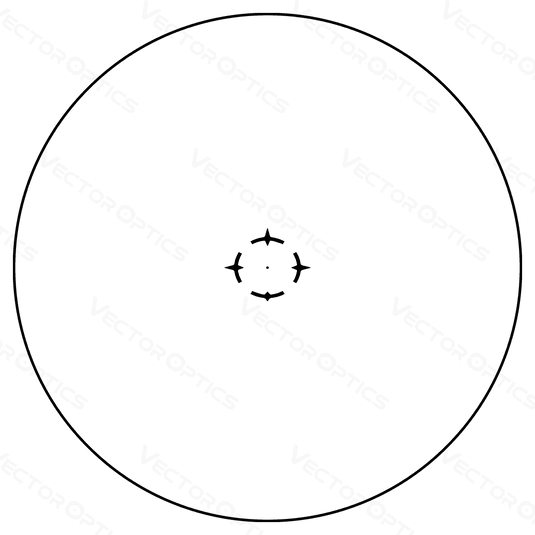
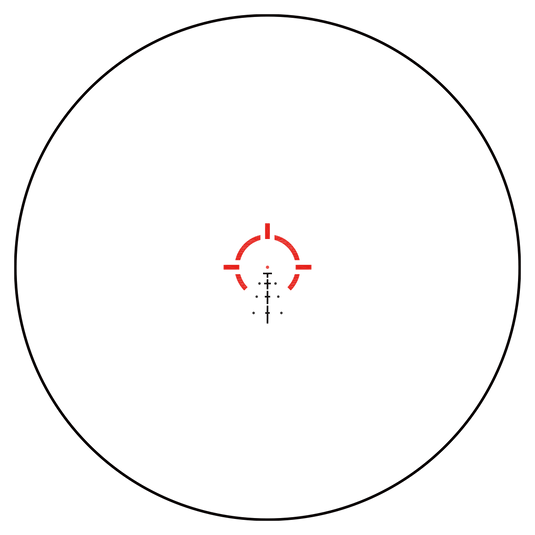
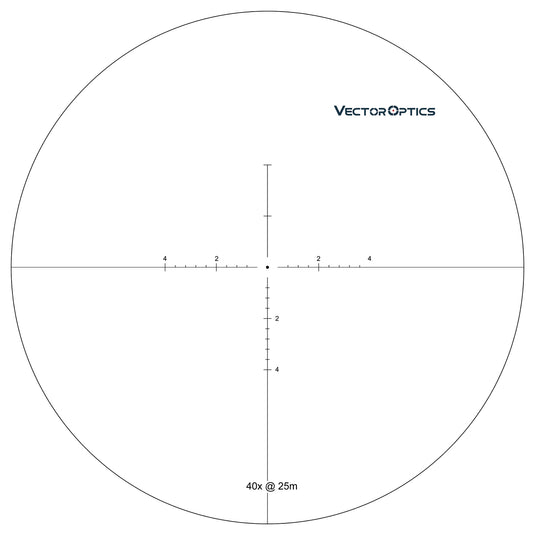
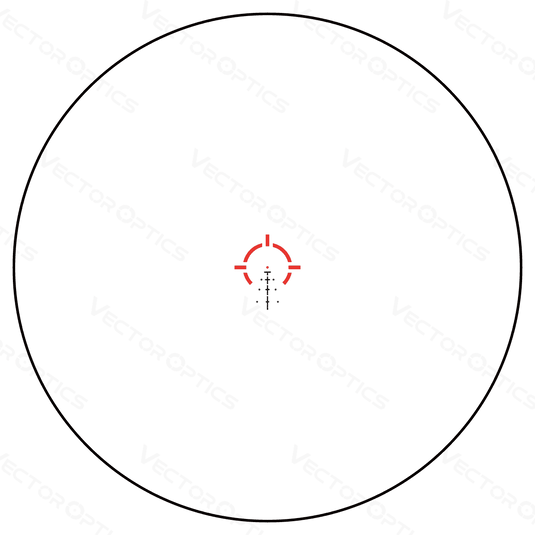
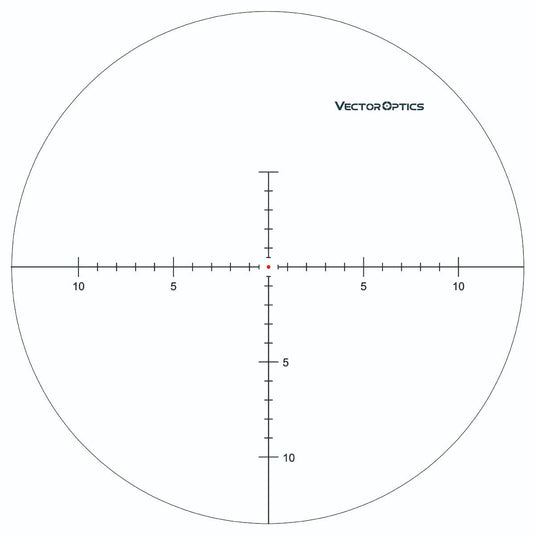
The reticle is specifically calibrated for 5.56x45mm / .223 Remington 55gr FMJ ammunition, zeroed at 50 yards. It features holdover marks out to 600 yards, enabling fast and accurate target acquisition at extended distances using the built-in BDC (Bullet Drop Compensation) system.
For rapid and precise target acquisition, refer to the user manual for detailed instructions on using the BDC (Bullet Drop Compensation) system. The reticle includes labeled aiming points—A, B, C, and D—corresponding to 300, 400, 500, and 600 yards respectively, and is calibrated for common calibers such as .223, .308, and .270.

Windage dots are included and are calibrated for a 5 mph crosswind, helping shooters make quick wind adjustments in real-time.
With a 1 MOA center dot, the reticle remains unobtrusive and allows for precise aiming—especially when targeting bullseyes on standard 5 cm diameter targets at distances up to 200 yards.
This reticle is well-suited for dynamic shooting scenarios, combining speed and precision. Understanding MOA (Minute of Angle) is essential for using the reticle effectively. For a detailed explanation, check out our previous blog post: What does MOA mean?

The inner diameter of the reticle ring is 18 MOA, which allows you to estimate target distance based on a standard 18-inch-wide silhouette target (approximately 45 cm in width) at 100 yards.
If the target's width fills the entire ring, the target is about 100 yards away. If half of the target’s width fills the ring, then the target is approximately 50 yards away.

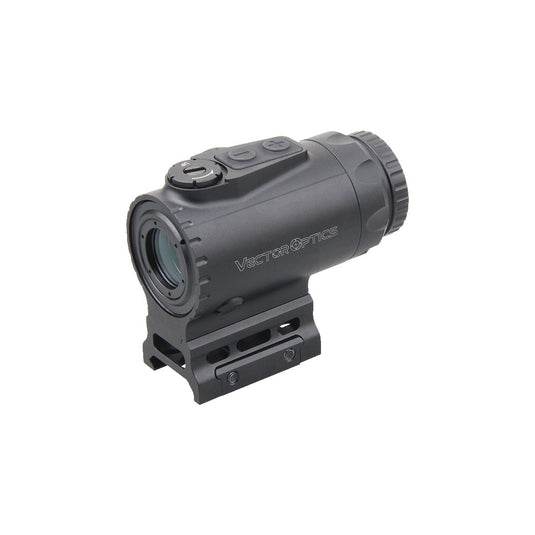
Some users who already own a 1x prism scope may prefer to save money by purchasing a magnifier instead of investing in a separate 3x or 4x prism scope.
In this setup, the magnifier is placed in front of the prism scope (closer to the shooter's eye), effectively creating a second focal plane configuration. This configuration magnifies the target image while keeping the reticle size consistent, helping to maintain clarity and improve precision at longer distances.
Can You Use a Magnifier with a 1× Prism Scope?
For shooters who want flexibility, pairing a 1× prism scope with a magnifier is a practical option.
This setup allows you to keep the speed of a 1× for close-range use, while adding magnification when needed. It’s a way to extend capability without fully committing to a higher fixed magnification optic.
When using a magnifier, the target image becomes larger, but the reticle stays the same size. This helps maintain a familiar aiming point while improving target visibility at distance.
There are a few details to keep in mind. Proper alignment between the prism scope and magnifier is important to maintain a clear sight picture. Mount height needs to match, otherwise the image can feel off.
Magnification also changes how you interpret the reticle. Since the target appears larger, distance estimation requires a small mental adjustment to stay accurate.
And like any magnified setup, your field of view becomes tighter, which can affect how quickly you move between targets.
Final Thoughts
Choosing between 1×, 3×, and 4× prism scopes really comes down to how your setup is used most of the time.
If your shooting is fast, close, and reactive, a 1× keeps everything simple and intuitive.
If you spend more time at distance, 3× or 4× offers better clarity and control.
And for those who want a bit of both, starting with 1× and adding magnification later is a flexible path.
In many cases, it’s less about picking the “best” option—and more about choosing the one that feels natural every time you bring the rifle up.
FAQ
Is a 1× prism scope suitable for hunting?
It works well in close-range environments where quick shots are more important than magnification, such as wooded areas or dense terrain. For more open spaces, higher magnification can make target identification easier.
Will a magnifier reduce field of view?
Yes, adding magnification naturally narrows what you can see around the target. While it improves detail, it can slightly slow down transitions and reduce situational awareness.
Can you use a magnifier with a prism scope?
In most cases, yes. As long as the optic and magnifier are properly aligned, the setup can work effectively. Matching mount height is key to maintaining a clear and comfortable sight picture.
Best Sellers